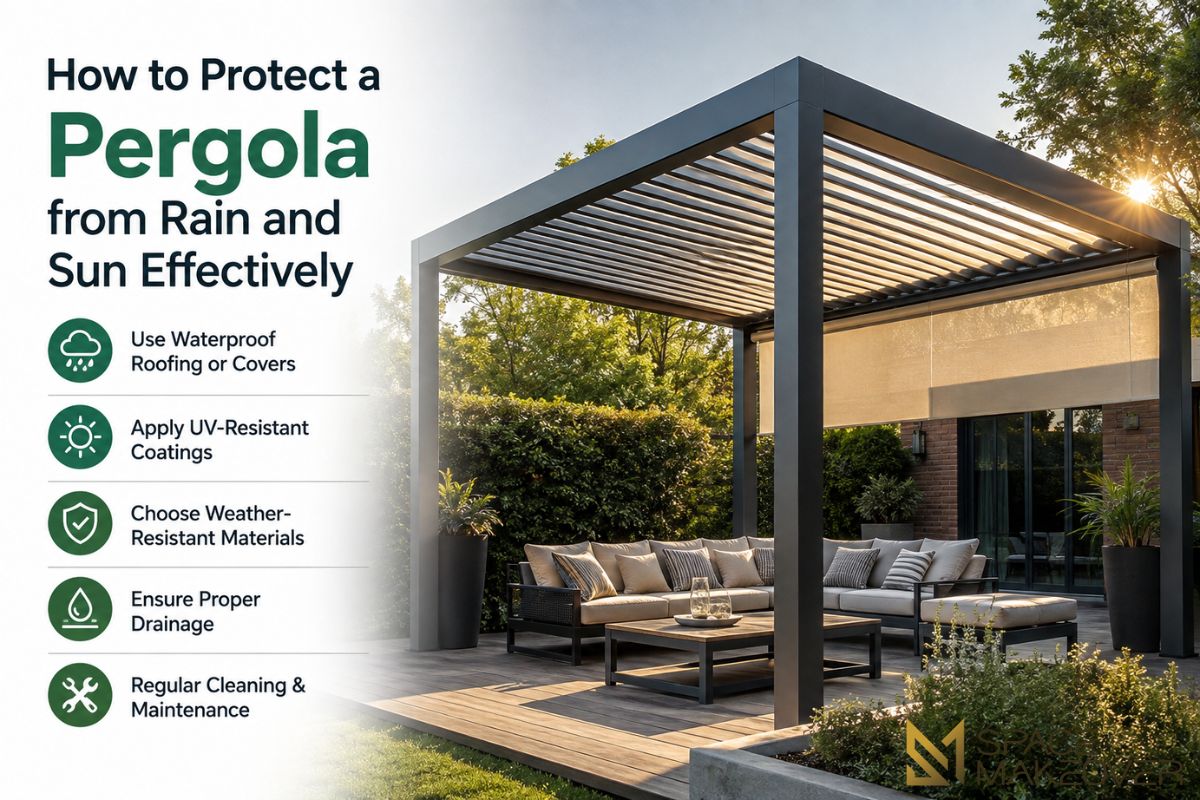
How to Protect a Pergola from Rain and Sun Effectively
Key takeaways
- The temperature and humidity levels in Dubai can affect the durability of structures constructed outdoors. This implies certain relevant considerations with regard to the type of material to be used.
- Therefore, aluminum is the better weather-resistant choice when compared to wood.
- Modern motors create operable louvres designed to protect people from sunshine and rain.
- With proper care and maintenance, a pergola can continue serving you and looking beautiful for years.
Dubai gets over 300 days of sun a year, and summer temperatures sit above 45°C for weeks at a stretch. Then winter brings a handful of sudden rain and wind events that hit structures built with sun in mind, not water. If you have a pergola or plan to get one, the question is not whether you need to take care of it; rather, is it designed to withstand the elements effectively so that you avoid regular repairs.
Why does pergola protection matter in Dubai’s climate?
A Dubai pergola has to endure harsher conditions compared to other areas with milder climates. Sun rays deteriorate wood quality and finishes over time, while rain disturbs flat surfaces, which creates stains if drainage has not been implemented correctly. Add sand and dust from wind, and a structure is fighting three separate stressors at once.
Homeowners who skip this planning stage often replace slats or repaint within two years. Working with experienced pergola suppliers in Dubai from the design stage helps avoid that. They know which combinations of material and finish actually survive local conditions, not just what looks good in a catalogue photo.
Choosing the right pergola material
Material is the biggest factor in how well a pergola resists rain and sun. Three options dominate the Dubai market.
- Aluminum- It does not corrode,: does not distort when heated, and requires little maintenance except cleaning now and then. Powder-coated metal products maintain their colour for a long time despite the sun. For this reason, almost all aluminum pergola manufacturers in Dubai use powder-coated aluminum structures, as it is virtually maintenance-free.
- Timber – It gives warmth, which is impossible to achieve with aluminum. But unsealed or poorly-treated timber swells under moisture and splits when exposed to the sun for long. To get a wooden pergola, you will need treated timber; the timber usually used is teak or thermally modified pine with a UV protection treatment applied every 12 to 18 months. A reliable wooden pergola supplier in Dubai will inform you about this before you buy one.
- Composite materials– This wood-look aluminum or WPC- split the difference: the look of timber without the annual sealing routine. They cost more going in.
Moreover, if low maintenance matters more than natural texture, aluminum wins. If the wood look is non-negotiable, budget for regular sealing as part of owning the thing, not as a surprise expense two years in.
Sun protection: roofing and louvre options
An open-lattice pergola looks classic but offers minimal shade. Direct sun still gets through most of the day. For real sun protection, you’re generally choosing between:
- Fixed slatted roofs, angled to block high midday sun while still allowing airflow
- Retractable canopy fabric in UV-treated polyester, which blocks up to 95% of UV rays when closed
- Aluminum louvre roofing, adjustable manually or by motor, to control light through the day
Furthermore, louvre systems tend to perform best in Dubai because they also handle rain when closed, something a fixed lattice roof simply can’t do. That dual function is a big part of why demand for pergola suppliers in Dubai has shifted toward louvred and motorised designs over the last few years, away from the traditional open-beam style.
Rain protection: drainage and sealing
While the sun is the major point of concern, it is worth noting that rain can cause major problems, especially because most roofs weren’t constructed to deal with the associated troubles.
- Slope and drainage- If the roofing is flat, pooling can occur and corrosion of joints and rotting of wood may result. However, even a little slope of 3-5 degrees can make roof drainage very efficient.
- Sealed joints- Where beams meet posts, or where roofing panels overlap, water finds a way in if the seams aren’t properly sealed. This is where cheaper installations tend to fail first, not the materials, the joinery.
- Integrated gutters- For louvred aluminum pergolas, built-in rain channels along the frame send water to a downspout instead of letting it drip onto seating below. Most aluminum pergola manufacturers in Dubai include this as standard now, though it’s worth confirming before you sign anything, since not every supplier does.
The case for motorised pergolas
Motorised louvre pergolas are certainly worth the investment, especially for homeowners looking for an adaptable outdoor space. The convenience of using a remote or mobile application to adjust the angle of the louvres according to the sun, as well as to close them in case of rain or open them up on a mild evening makes motorised louvre pergolas quite advantageous.
Consequently, there are now many motorised pergola manufacturers in Dubai who incorporate rain sensors so that the louvres close on their own when it starts raining. Wind sensors are also frequently used so that the motion stops before reaching dangerous wind speed.
This does come at a price, plus the motor may need occasional repair. However, if you are using the outdoor area for dining and entertaining, you would find the investment to be worth it over the years.
Maintenance habits that extend pergola life
Even a well-built pergola needs upkeep. A few habits make a measurable difference:
- Clear debris from gutters and drainage channels every few months, especially before the rainy season
- Inspect wood sealant yearly and reapply before cracks show up, not after
- Check motorised components for dust buildup. Sand is harder on motors than most people assume.
- Wipe down aluminum surfaces now and then. Dust plus humidity dulls powder coating faster than sun alone.
Additionally, skip this for a year or two and a small issue turns into a costly repair. It’s that simple.
Common mistakes homeowners make
A few mistakes show up again and again across poorly performing installations:
- Choosing untreated wood without budgeting for the resealing it needs
- Installing flat roofing without enough pitch for drainage
- Assuming a pergola needs no maintenance just because it’s outdoors
- Skipping professional installation to save money, which usually shows up later as leaks at badly sealed joints
However, most of this comes down to underestimating how differently Dubai’s climate behaves compared to more temperate regions. It’s not just the heat. It’s heat, occasional intense rain, and dust, all working on the structure at once.
Comparison table: pergola types and protection levels
| Pergola Type | Sun Protection | Rain Protection | Maintenance Level |
| Open lattice (wood or aluminum) | Low | Low | Low (aluminum) / High (wood) |
| Fixed slatted roof | Medium-High | Medium | Low |
| Retractable fabric canopy | High (when closed) | Medium | Medium |
| Motorised aluminum louvre | High (adjustable) | High (when closed) | Low-Medium |
Conclusion
The first step to protecting a pergola in Dubai’s hot and rainy climate is selecting the appropriate materials. The selection should depend on the intended use of the pergola and the level of maintenance desired. A louvre or motorized roof will make an aluminum pergola a low maintenance choice.
When you are putting up a new pergola or upgrading an old pergola, Space Makeover can assist you in selecting the ideal material, roof, and drainage system to help keep your pergola protected from the weather.
Frequently asked questions
If coated correctly, an aluminum pergola will last 15-20 years and only slightly deteriorate even with continuous exposure to the sun.
Yes, with proper treatment. Teak or thermally modified wood which is resealed every 12 to 18 months is resistant to heat and UV.
Yes for outdoor spaces that are used a lot. The added up-front expense is typically worth it for the ability to control exposure to sunlight and rainfall.
Ensure that gutters and drainage canals are inspected at least twice or three times per year as well as prior to the rainy season to prevent blockage and pooling.
Motorised aluminum louvre roofing is the best protection because it can provide shade and close completely in the event of a rain.
Quality powder coating will not fade for years but a yearly inspection will pick up any signs of wear before they’re apparent.
Just 3 to 5 degrees of pitch will prevent water from pooling and significantly reduce the risk of corrosion and staining.
Usually, yes. Adding a fixed or motorised roof onto an existing frame is viable as long as the frame can support the extra weight.
The majority of leaks occur at poorly sealed joints between beams and posts or at joints between roofing panels. It is not usually the materials that are the problem.
The cost of fixed systems is less and they require no service. Motorised systems provide you with flexibility each day. Depending on budget and use, you can pick the right one.