
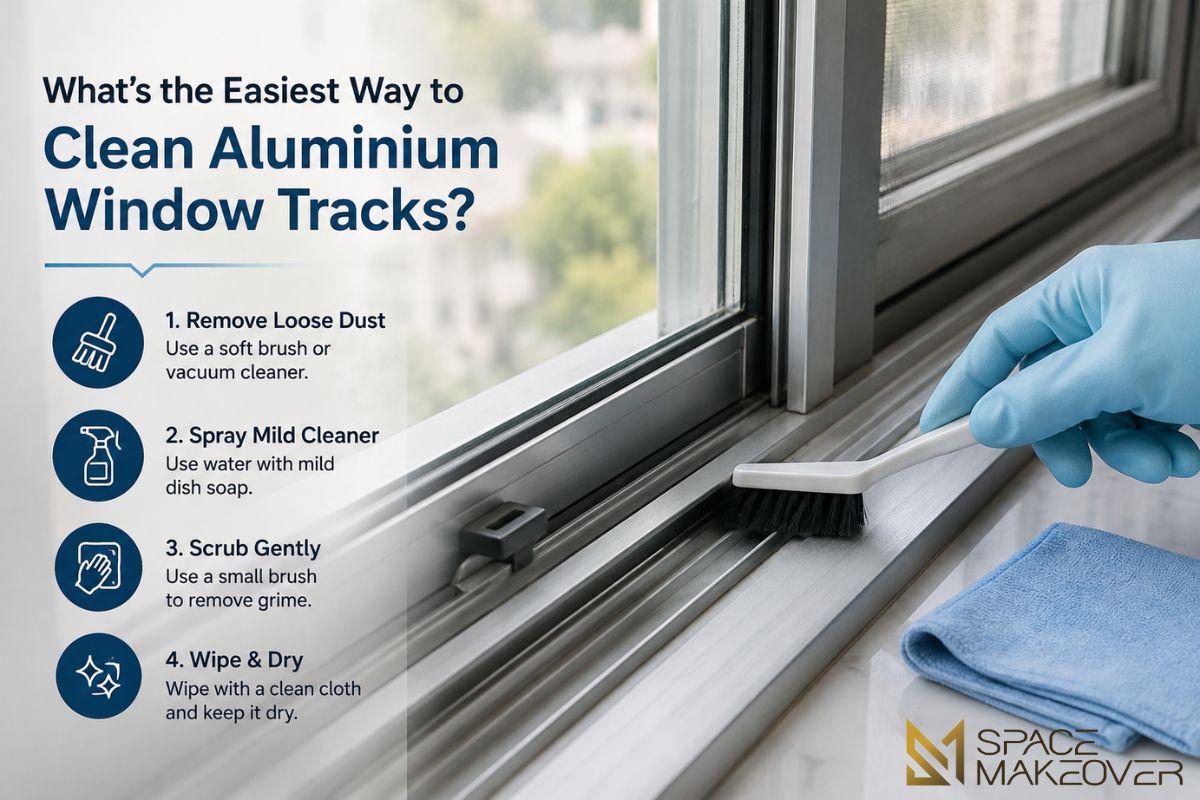
What’s the Easiest Way to Clean Aluminium Window Tracks?
Starting with removing dirt and dust by using a vacuum. Next, one needs to use a soft implement along with warm water and detergent. Scraping off the debris will help. After cleaning it, the area should be wiped with a soft cloth. In the end, moving the window back and forth will clean off dirt and dust from the track.
The overall nature of the climate present in Dubai is dusty, and thus the tracks themselves catch dust very quickly. Given the fact that these tracks are horizontal and are not visually seen, they manage to get dirty compared to other areas of the window. Thus, for aluminum sliding windows in this city, proper cleaning of the window tracks would lead to prevention of sticking, along with deterioration of the window.
Key takeaways
- A soft brush, soapy water, and vacuum work for the most part in removing nearly all dirt on the tracks.
- Once exposed to the UAE dust, your tracks may get dirty every two to three weeks.
- Sticking tracks usually suggest that the rollers have worn out instead of merely being obstructed by dirt.
- Damaged tracks should be replaced anyway because they will break after some time.
Why do aluminium window tracks get dirty so fast in the UAE?
Window tracks don’t just get affected by dust from the desert. Dust from construction work, condensation from air conditioning, and salty air from ocean seaports have a chance to combine and create a gluey dirt. Once dried up, this dirt hardens within the grooves and is not easily removed by just wiping it.
Therefore , when people experience the sticking of a sliding window, the first idea seems to be about the possibility of hardware failure. However, most of the time, it is just dirt that gets accumulated along the track and creates resistance for the rollers.
What you’ll need before you start?
There is no need for any specialized equipment. All that you need is a handheld vacuum with a thin nozzle, an old toothbrush or a soft nylon brush, some mild dish soap, warm water and a microfiber cloth, and in the event of persistent stains, some white vinegar. Avoid using any abrasive materials. For example, steel wool or coarse scrubbing pads can scratch the anodized finish on the aluminum, which can make the corrosion form more quickly.
Step-by-step: The easiest cleaning method
- Vacuum first. This removes 60–70% of the dry debris before you introduce any moisture, which matters because wet dust turns to mud and gets harder to remove.
- Mix warm water with a few drops of dish soap.
- Dip the brush and scrub along the length of the track, following the direction of the groove rather than scrubbing side to side.
- Wipe with a damp cloth, then a dry one immediately after.
- Slide the window a few times to loosen anything still lodged in corners, then vacuum once more.
For double-track sliders, do one channel at a time. Trying to clean both at once usually means you rush the second one.
Stubborn grease and rust spots
Kitchen-facing windows pick up cooking residue that plain soap won’t cut. A 1:1 mix of white vinegar and water breaks down grease without touching the finish, though it should sit for two or three minutes before you scrub. For light surface rust on older frames, a paste of baking soda and water works, applied gently with an old toothbrush and rinsed off right away so it doesn’t sit and trap moisture.
How often should you actually clean them?
Most general advice online says quarterly. In practice, that’s too infrequent here. Ground-floor units facing a road, or anything near a construction zone, benefit from a quick vacuum every 3–4 weeks and a full wash monthly. Upper-floor units away from dust sources can usually stretch to every two months. If you own slim sliding windows in Ajman, clean the tracks when you notice grit in the vicinity of the window.
Mistakes That Damage the Track
- Using a metal scraper to dig out debris- It gouges the aluminium and creates rough spots that trap more dirt going forward.
- Spraying WD-40 or similar lubricants into a dirty track- It binds with existing grit into a gum that’s worse than what you started with. Clean first, lubricate after, with a silicone-based spray rather than a petroleum one.
- Leaving the track wet- Trapped moisture is what actually starts corrosion, not the water itself.
- Ignoring the weep holes- These small drainage holes at the base of the track clear water away. If they’re clogged, cleaning the rest of the track won’t stop pooling.
When cleaning isn’t enough: signs you need a repair or upgrade
Some problems look like dirt but aren’t. If the sash still drags after a full clean and lubrication, the rollers are probably worn and need replacing rather than the track needing more scrubbing. Bent or dented tracks, usually from someone forcing a stuck window, won’t straighten out with any amount of cleaning. Moreover, if you’re seeing white powdery corrosion (aluminium oxide) rather than surface dust, that’s a sign the anodised layer has already broken down in that spot.
At that point, patch repairs tend to be a short-term fix. This is where a company offering proper aluminium doors and windows services in Dubai earns its cost. They can tell you honestly whether a track needs replacing or the whole unit does, instead of just selling you a repair that fails again in eight months.
Choosing the right windows if you’re replacing anyway
If a window is old enough that the track, rollers, and seals are all failing together, replacement often works out cheaper than three separate repair callouts over a year. Modern aluminium sliding windows in Dubai now come with deeper, self-draining tracks built around the region’s dust load. That cuts down how often you’ll need to go through this whole process in the first place.
For apartments or villas with narrow window openings, slim-profile frames are worth asking about specifically. We’ve fitted slim sliding windows for a few clients dealing with older buildings where the original openings weren’t built with modern insulation standards in mind. The narrower frame profile let them keep more glass area without touching the opening size, and it’s a small detail that changes how much light a room gets.
| Factor | Standard Track Sliders | Deep-Drain / Slim-Profile Sliders |
| Debris accumulation | Higher, shallow groove | Lower, engineered channel depth |
| Cleaning frequency needed | Every 3–4 weeks (exposed units) | Every 6–8 weeks |
| Frame visibility (glass area) | Standard | Narrower frame, more glass |
| Best suited for | Existing standard openings | Renovations, narrow openings |
| Typical maintenance cost over 5 years | Moderate to high | Lower |
Common mistakes to avoid
Beyond the track-specific errors above, people often clean the track and stop there, ignoring the rollers underneath the sash itself. A track can be spotless and a window will still stick if the rollers are caked in the same grime. Pull the sash up and out (most sliders allow this) and check the roller wheels every few months.
Bottom line
Cleaning an aluminium window track isn’t complicated, and it doesn’t need special tools. Vacuum, soapy water, a soft brush, and a dry cloth handle the job in most homes. What matters more is frequency, given how much dust this region generates, and knowing when a sticking window is a cleaning problem versus a hardware one.
If you’ve cleaned a track properly and it’s still dragging, or the frame itself looks compromised, that’s usually the point to call in a specialist rather than keep patching it. Space Makeover handles exactly this kind of assessment for Dubai and Ajman homeowners, from track and roller repairs through to full window replacement where it makes more sense.
Frequently asked questions
Yes, diluted white vinegar is safe for anodised aluminium. Avoid full-strength vinegar on unanodised or painted frames, as it can dull the finish over repeated use.
Open windows, nearby construction, and seasonal wind patterns push dust in constantly. Weekly vacuuming between full cleans slows the buildup significantly.
That white residue is aluminium oxide, a sign of surface corrosion. Light cases can be cleaned off; heavier buildup usually means the coating has failed there.
Yes, a silicone-based spray works best. Avoid petroleum-based lubricants like WD-40, which attract more dust over time.
Use a thin wire or pipe cleaner to clear the small drainage holes at the track’s base. Check them every clean, since blockages cause water pooling.
Yes. Compacted grit acts like sandpaper against the rollers, wearing them down faster and eventually causing the sash to derail or jam.
Slim-profile frames use less visible aluminium per panel, giving more glass area and light. They also tend to have deeper, self-draining tracks.
If cleaning and lubrication don’t fix sticking, or the frame shows cracks or heavy corrosion, get a professional assessment before spending on repeated repairs.
The cleaning method is the same, but double-glazed sashes are heavier, so worn rollers show up as dragging sooner than on single-glazed units.
DIY cleaning covers routine maintenance fine. For repairs, replacements, or full assessments, a proper aluminium doors and windows service in Dubai is worth the call