
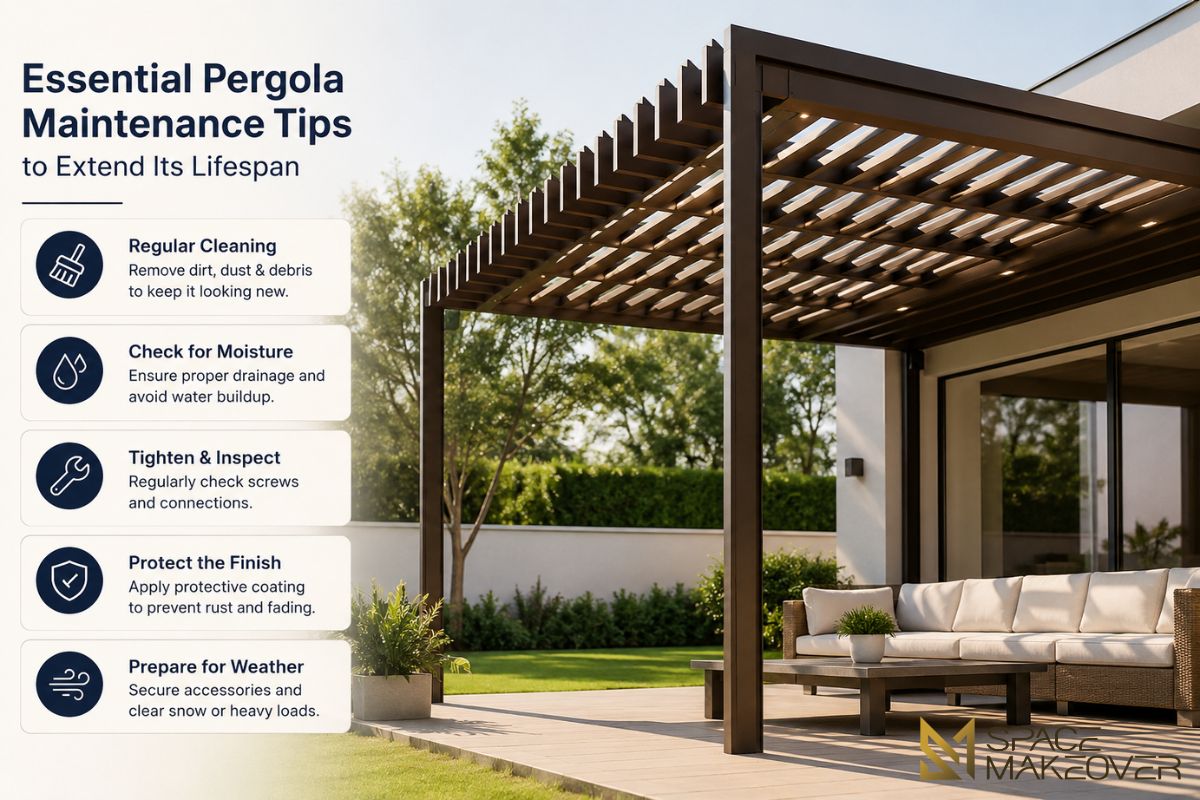
Essential Pergola Maintenance Tips to Extend Its Lifespan
Cleaning the pergola every month or two, checking the hardware twice a year, keeping the drainage channels clean, and applying protective coatings are guaranteed to prolong the life of the structure. Aluminum structures require the least maintenance; wood needs to be sealed once a season, while motorized units require regular checks of their sensors and tracks.
Homeowners who abide by these guidelines can expect their pergola to last between 10 and 20 years, as most suppliers and companies working in pergola installation in Ajman offer tools and materials for effortless maintenance of the structure.
Key takeaways
- The cleaning of the pergola must be done in a frequency of between 4 and 8 weeks so that dirt and bacteria do not accumulate over time.
- Although metallic joints in aluminum are very resistant to corrosion, they must still be checked regularly.
- Wooden pergolas should be resealed every 12-18 months.
- It is good practice to maintain all mechanics behind the tracks, sensors, and software to ensure that the motorized pergola continues to function effectively.
Why does pergola maintenance matter in the UAE climate?
The use of outdoor structures in the Gulf comes with a unique combination of stresses that not many other regions are facing with the same intensity. Strong UV rays eventually break the protective coatings and allow wood to fade all its colors in just one summer. Sand in the air acts as fine sandpaper for all the moving parts and hinges. Saltwater contributes to the oxidation of any metal clip that remains uncoated, even if it is a weatherproof frame.
Moreover, this gives rise to the fact that the recommendation of most installers is to have the first inspection done six months after a new installation, not waiting for a year, even if you are buying something from reliable pergola suppliers in Ajman. The first inspections are made to identify minor problems, like a small bracket loose or a tiny crack in the sealant joint, before they can become serious.
Know your pergola material before you maintain it
The maintenance of structures is tailored to the materials they are made of. While a particular approach works wonders for aluminum frames, it may be of little use for wooden structures, while motorized structures involve mechanical components not necessarily present in nature.
- Aluminum Pergola
The UAE is a fan of aluminum because of its good response to heat and humidity. Compared to other materials, aluminum does not decay, and it is less affected by rust than steel. Still, the powder-coated finishes can chip from impact or abrasive cleaning, resulting in oxidation of the aluminum underneath. This is why a number of aluminum pergola manufacturers in Dubai now apply marine-grade coatings to their products.
- Wooden Pergolas
While wood gives warmth and an organic appearance that aluminum can’t replicate, wood requires the most required of maintenance of the three materials. If wood is untreated or poorly treated, it will get cracked, warped, and grey within a year while sitting in the sun. Several companies that supply wooden pergolas in Dubai encourage the use of hardwoods like teak wood or treated pine because those woods are known for their resistance to pests and moisture. Despite this fact, even those types of wood require maintenance.
- Motorised Pergolas
Motorized pergolas can help you avoid the scorching sun as well as add to the aesthetics of your patio through shutters and awnings that can be opened and closed using a remote. However, moving pergolas have a problem that arises from the operation of mechanical parts. In particular, the motors, tracks, joints, and even seals, which are not present in fixed structures, are all susceptible to dust and require constant attention as a result.
Routine cleaning practices that actually work
Cleaning a pergola is very easy, but if done improperly, it may cause more damage than not cleaning at all. Usually, a simple brush, mild soap, and warm water are all you need to get rid of dirt. Although pressure washers appear to be very efficient tools, they may actually do more harm to the material than keep it clean, pushing water into wood, or stripping protective coating from aluminum.
If you live in a very dusty or coastal area, you can do a light rinse every four to six weeks to remove any dirt and sand that accumulates in hinges and tracks. Cleaning too infrequently, like waiting for about two to three months, may lead to irreversible hardening of dirt on the surface, which requires significant scrubbing down with the risk of damaging the original finish of the pergola.
Inspecting hardware, joints, and structural points
Fasteners, brackets, and other small parts are often ignored, probably because people seldom notice them. Heat cycling makes fasteners lose their grip on the structures over time since material expands during daytime and contracts at night. An inspection every six months, ideally before and after summer, can help ensure that faulty equipment is fixed before it can become a problem.
Check for:
- Rusty stains around screws or joints, even on aluminum frames
- Minor cracks in welds and connections
- Loose covers of support columns
- Improper gaps between panels and frames
Therefore, it takes only a few minutes to tighten a loose bolt, while replacing a post caused by an unnoticed bracket can take much longer.
Managing drainage and water damage
Standing water is one of the most underestimated threats to pergola longevity. Whether it’s rainfall, condensation, or runoff from a retractable roof, water that pools instead of draining will find the weakest point in the structure. Usually that’s a seam, a joint, or a spot where the finish has already started to wear.
Furthermore, check drainage channels and gutters attached to the pergola roof at least twice a year, clearing out leaves, sand, and debris that block flow. On wooden structures, standing water speeds up rot dramatically, sometimes cutting the effective lifespan of an untreated beam in half. On motorised units, water pooling near the motor housing or electrical components is a safety issue, not just a cosmetic one.
Caring for finishes and coatings
The finish on a pergola isn’t just decorative. It’s the main barrier between the material underneath and UV rays, moisture, and salt air. Once a coating starts chalking, peeling, or fading unevenly, the material beneath loses its protection and degrades much faster.
For aluminum, that usually means a fresh coat of exterior-grade paint or a professional recoat every few years, depending on sun exposure. Some aluminum pergola manufacturers in Dubai offer recoating services directly, which is worth checking before hiring a third party, since factory-matched coatings tend to bond and weather more evenly than aftermarket ones. For wood, it means reapplying sealant, stain, or oil on a schedule rather than waiting until the surface visibly dries out.
Motorised pergola maintenance essentials
Motorised systems fail for mechanical reasons far more often than electronic ones. Dust and sand work into track channels and sliding mechanisms, and over time that grit wears down parts that were designed to glide smoothly.
A few habits keep these systems running reliably:
- Wipe down tracks and rails monthly to remove sand and dust buildup
- Test the motor’s full range of motion every few weeks, even if you’re not using it daily
- Keep sensors and remote receivers free of dust, since a dirty sensor is a common cause of unresponsive controls
- Check the manufacturer’s app or manual for firmware updates on newer smart-enabled units
Several motorised pergola manufacturers now build in self-diagnostic alerts that flag unusual motor resistance before it becomes a full failure, but that only helps if someone actually checks the app now and then. A pergola that automates itself still needs a person paying occasional attention.
When something does go wrong, resist the urge to force the mechanism manually. Forcing a stuck louver or canopy often strips the internal gearing, turning a simple sensor fix into a full motor replacement. If a motorised system stalls or grinds, it’s worth calling the installer before attempting a manual override, since many motorised pergola manufacturers in Dubai offer warranty coverage that tampering can void. Some also recommend a short annual service visit for units under continuous outdoor exposure, on top of whatever cleaning the owner does themselves.
Wooden pergola care through the seasons
Wood ages visibly, which is part of its appeal, but that aging needs managing rather than ignoring. Left untreated, exposed timber in direct UAE sun can grey and crack within a single summer.
A seasonal approach works best. Before peak summer heat, apply or refresh a UV-protective sealant on exposed surfaces. After summer, check for splitting or warping caused by extreme heat, since these are far easier to sand and treat early than once they’ve widened. Many buyers working with wooden pergola suppliers in Dubai are surprised to learn the maintenance schedule matters more to long-term appearance than the initial wood grade. Even premium hardwood degrades quickly without consistent sealing, which is why suppliers often hear from owners within the first year or two asking about graying or cracking that a proper sealing routine would have prevented.
Termite and insect checks matter too, particularly for structures near gardens or irrigation systems where moisture collects at the base of support posts.
Common maintenance mistakes to avoid
A few habits show up again and again among homeowners who end up needing early repairs:
- Pressure washing at close range, which strips coatings and forces water into wood grain
- Ignoring small rust spots, assuming they’re cosmetic when they often signal a coating breach
- Skipping off-season inspections and checking only once a problem is already visible
- Using harsh chemical cleaners not rated for the specific coating or wood treatment
- Forcing motorised components manually instead of calling a technician
None of these are dramatic on their own. The damage comes from repetition, doing the wrong thing consistently over several seasons until the structure shows wear years ahead of schedule.
Expert insight: when to call a professional
Not every maintenance task is a DIY job. Structural cracks, motor failures, and coating damage that’s spread beyond a small patch usually need professional attention rather than a home fix that might make things worse.
Installers who specialize in outdoor structures generally recommend a full inspection every two to three years even if nothing seems wrong, since some stress points, particularly at load-bearing joints, aren’t visible without removing panels or accessing the frame from angles a homeowner wouldn’t normally check. This is usually the point where the choice of pergola suppliers in Ajman and Dubai starts to matter, since not every supplier offers ongoing maintenance or repair support after installation. Picking one that does can save real money over the structure’s lifetime.
What do the numbers say about pergola longevity?
Lifespan estimates line up with what installers see in the field. Aluminum structures with quality powder coating typically last 20 to 30 years with routine care, a range that lines up with warranty terms aluminum pergola manufacturers in Dubai commonly offer. Untreated softwood can show real structural degradation within 5 to 7 years in a high-UV, high-humidity climate, while properly sealed hardwood can hold up for 15 years or more with regular reapplication of protective coatings.
Demand for shaded outdoor living space has also grown across the UAE as more people use terraces and gardens year-round instead of only in cooler months. That shift has pushed manufacturers toward more climate-specific coatings and motorised features than were common even five years ago.
Bottom line
A pergola is a long-term investment, and the difference between one that looks worn out after three years and one that still looks sharp after fifteen almost always comes down to maintenance habits, not the initial build quality. Clean it regularly, inspect the hardware before problems become visible, manage water before it pools, and treat the finish as protection rather than decoration. Whether your structure is aluminum, wood, or motorised, small, consistent effort beats occasional deep intervention.
For anyone planning a new installation or looking to extend the life of an existing structure, Space Makeover designs and builds pergolas suited to the realities of the UAE climate, with maintenance guidance built into every project from the start.
Frequently asked questions
- How often should I clean my pergola?
Every four to eight weeks in most UAE locations. More often in coastal or high-dust areas, where sand and salt buildup happens faster. - Do aluminum pergolas need less maintenance than wooden ones?
Yes. Aluminum won’t rot or attract insects, though its coating still needs periodic checks and occasional recoating for long-term durability. - How long do wooden pergolas last in the UAE climate?
With proper sealing and seasonal maintenance, 15 years or more. Untreated wood can degrade within 5 to 7 years under intense sun and heat. - What causes motorised pergola motors to fail?
Dust and sand getting into tracks and sensors, not internal motor defects. Regular cleaning prevents most of these issues. - Can I pressure wash my pergola?
Light pressure from a distance is fine. Close-range pressure washing can strip coatings and drive water into wood grain or joints. - How do I know if my pergola’s hardware needs replacing?
Look for rust streaks, loose bolts, hairline cracks near welds, or uneven gaps between panels. Any of these deserve a closer look. - Is it normal for wooden pergolas to change color over time?
Yes, natural greying happens with UV exposure, but consistent sealing slows it down a lot and prevents the cracking that usually comes with it. - What should I do if my motorised pergola gets stuck?
Don’t force the mechanism by hand. Call the installer or manufacturer, since forcing it often damages the gearing and voids the warranty. - How often should professionals inspect a pergola?
Every two to three years for a full structural check, even with nothing obviously wrong, to catch stress points that aren’t visible from ground level. - Does the choice of supplier affect long-term maintenance needs?
Yes. Suppliers offering climate-appropriate coatings, solid hardware, and ongoing maintenance support tend to cut down on repairs significantly over the pergola’s life.