Can Aluminium Windows Really Block Out Noise?
Key Takeaways
- Quality glass and appropriate seals allow aluminium frames to help with sound insulation applications.
- Double- or laminated-glazed windows can eliminate sound intrusion in residential and commercial premises.
- High-quality seals are required in slim sliding windows to achieve optimal noise reduction.
- Proper installation guarantees maximum noise control and the long life of the windows.
Most people assume swapping old windows for aluminium ones will instantly quiet a noisy street. It’s a reasonable guess. Aluminium feels solid, looks modern, and gets sold as an upgrade across the board. But sound doesn’t care what the frame is made of nearly as much as people think. It is about spaces, thickness of the glass, and sealing.
If you are residing in Dubai near a construction site or in a place where trucks make noise in your house every hour, this is not an academic question for you, and you want to get an answer before buying new windows.
Why is noise a bigger problem in Dubai?
The traffic in Dubai never stops. Furthermore, construction work is going on in almost every neighborhood, airplanes are flying low in many roads, and the buildings are located very close to each other, which makes it easy for noise to travel from outside to inside these places.
Consequently, the older buildings are made of a single layer of thin glass and simple aluminum or wooden frames that were not made with the noise problem in mind. Instead, these structures were created with heat resistance and costs in mind. And it is the reason why residents of the old buildings notice noise only after some time.
Do aluminium windows actually reduce noise?
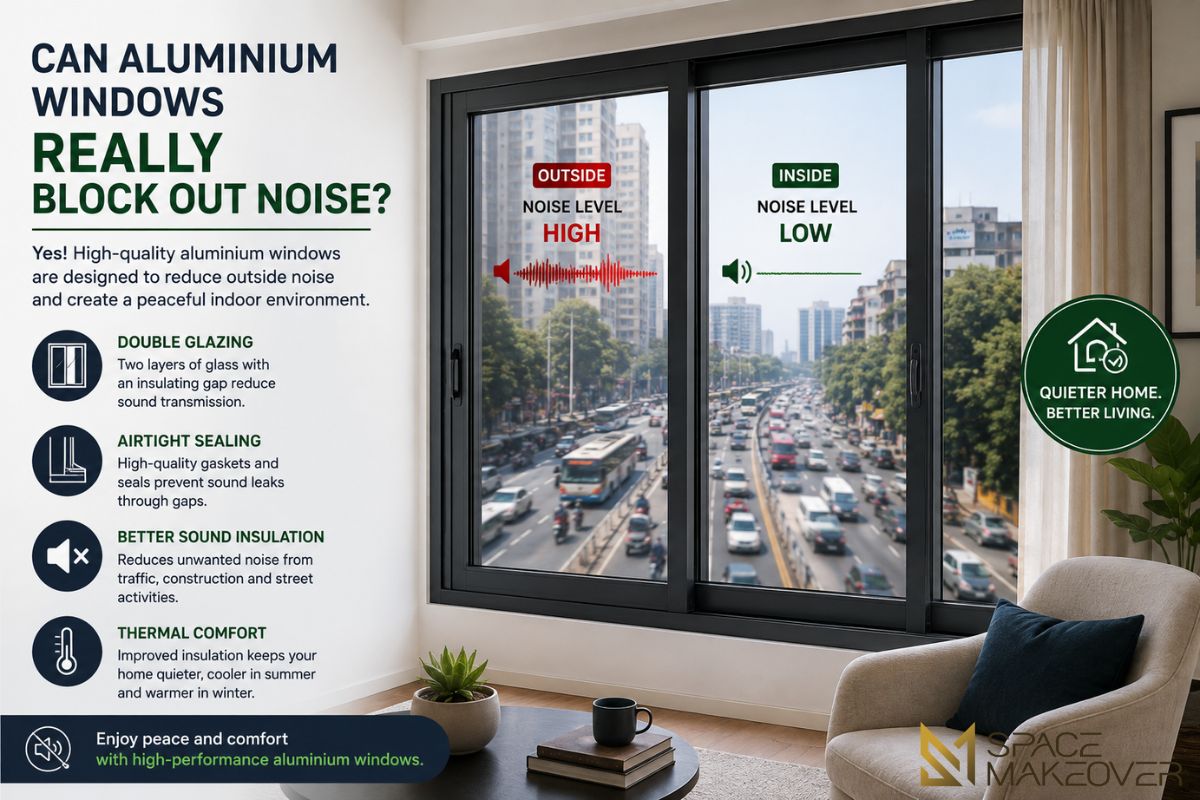
Yes, but with a catch most marketing material leaves out: it’s not the aluminium doing the work. Aluminum, in its pure form, isn’t the best material for good insulation against sound. Because it is rigid and conductive, it is able to transmit sound easily if not engineered appropriately. The type of glass used in making windows, its thickness, the gap between the panes, as well as the way the frame of the window seals the wall and the sash, is what determines the quality of insulation against sound.
A properly designed aluminum sliding window made of double-glazed glass with appropriately functioning interlocking seals can prove to be better than a solid wooden window made of single glazing. The frame material sets the foundation. The glazing system and installation decide the actual result.
Furthermore, this is where high-quality aluminium sliding windows in Dubai get their quality. They do not solely block sound due to the aluminium frame, but also thanks to reputable manufacturers who combine frames with special acoustic glass and accurate seals that block air gaps allowing noise in.
What makes an aluminium window soundproof?
There is no concept of a completely soundproof residential window. The terminology gets used too liberally. What you really want is noise insulation, meaning how much quieter the room becomes after the window is closed.
A few factors decide that outcome:
| Factor | Impact on Noise Reduction |
| Glass thickness | Thicker glass (6mm+) reduces more sound than thin panes |
| Air gap between panes | Wider gaps (12mm or more) dampen sound better than narrow ones |
| Seal quality | Poor seals can undo 50% or more of a window’s rated performance |
| Frame rigidity | A frame that flexes under wind or pressure lets sound leak through joints |
| Installation fit | Gaps around the frame itself, even small ones, let noise bypass the glass entirely |
Seals are the part people underestimate most. You can spend on the most expensive acoustic glass on the market, but if the rubber gasket around the sliding sash isn’t compressing properly, sound will find that weak point every time.
Slim frames vs bulky frames: does thickness matter?
This is where a lot of homeowners get confused. Slim sliding windows Dubai have caught on for their minimal sightlines and clean look. They let in more light and photograph better for interior projects. But a thinner frame profile means less material, and in some cases, less room for deep interlocking seals.
That doesn’t make slim frames automatically worse for noise. It means the engineering has to be tighter. A well-designed slim frame with precision-machined interlocks and quality gaskets can still perform close to a bulkier frame. The gap shows up more in cheaper slim systems, where manufacturers trim the seal mechanism to keep the profile thin and the price competitive.
If noise reduction matters to you and you’re leaning toward slim sliding windows in Dubai for the aesthetic, ask about the interlock design and gasket type before you commit. Slim doesn’t automatically mean less soundproof, but it isn’t automatically equal either. Check it yourself.
Single glazing vs double glazing for noise control
Single glazing is still common in older and budget installations here, mostly because it’s cheaper and Dubai’s heat concerns tend to get prioritized over sound. But single glazing offers limited resistance to noise. Sound waves pass through a single pane far more easily than through two panes separated by an air gap.
Double glazing works by creating a buffer. Sound has to pass through the first pane, cross an air- or gas-filled gap, then pass through the second pane, and each transition dissipates some of that energy. A wider gap helps, and so does mismatching the thickness of the two panes, a technique called asymmetric glazing. Matched panes can actually resonate at similar frequencies and let more sound through, which is the opposite of what you want.
Furthermore, if you’re comparing aluminium sliding windows in Dubai for a home near a busy road, double glazing isn’t optional when noise is a real concern. It’s the baseline. Triple glazing exists but is rarely worth it here, given the added cost against the diminishing returns for typical urban noise levels.
Common mistakes homeowners make
- Choosing glass thickness based on heat performance alone- Thermal and acoustic performance don’t always line up. Some glass rated well for insulation is only mediocre for sound.
- Ignoring the frame-to-wall seal- Even acoustic glass won’t help if there’s a visible gap between the window frame and the surrounding wall.
- Assuming price equals performance- Some mid-range products with proper installation outperform premium products installed poorly.
- Skipping a site assessment- Every building has different noise sources, whether it’s traffic, construction, or aircraft, and the right glazing spec depends on identifying which one dominates.
- Not asking about the interlock system on sliding tracks- Sliding windows have a joint where two panels meet, and it’s often the weakest point acoustically if that interlock isn’t designed well.
What to ask before you install?
Before signing off on any supplier, ask a few direct questions. What’s the glass thickness and air gap spec? What seal or gasket material is used, and is it rated for Dubai’s heat without breaking down? Can they point you to a finished installation nearby facing a similar noise source? A reputable installer offering aluminium and glass works in Sharjah or Dubai should answer these without much hesitation.
Additionally, it also helps to ask what happens after installation. Are seals serviced, checked, or replaced periodically? UV exposure and heat cycling in this climate wear down rubber gaskets faster than they would somewhere milder.
Expert insight
Across projects handling aluminium and glass works in Sharjah and Dubai, the pattern repeats itself. Clients who focus entirely on the frame brand and glass rating almost always overlook installation tolerance. Although a 2mm gap appears minor at installation, it is sufficient to allow significant street noise to pass through as time goes on, especially as the sealant deteriorates and shrinks when it gets hot.
Clients who are the most satisfied are those who consider the purchase to be a system solution (frame, glass, seal, and installation) instead of a single product purchase.
Conclusion
The fact that aluminium windows can effectively reduce noise does not mean that the frame is the only important aspect of their functioning. The noise-proofing performance of windows is affected by more factors than most people think: the thickness of the glass, size of air gaps, quality of seals, and precision of installation are equally important. So, when deciding if aluminium windows are good (and whether they can block noise), it is essential to make sure that the whole ‘system’ has been well-considered and installed properly instead.
If you think a lot about the right choice of window for a noise-affected area, you will definitely find the Space Makeover approach very handy. It is the company that considers everything in its projects.
Frequently asked questions
The integrity of the glass and seals is more important in terms of performance than the frame material. The performance of aluminium or UPVC can be good or bad, depending on the spec of glazing and quality of installation.
Many homeowners see a significant reduction, typically between 25 and 35 decibels, is possible with the proper double glazing and sealing. Results may differ depending on the sound source and building.
Rarely. The extra expense in most cases is not justified compared with an adequately specified double glazing for the normal noise levels encountered here.
At times, when the frame depth permits it. The supplier should determine if all the glass in the existing frame can be replaced with thicker glass or if a wider air gap is needed.
Not inherently. Standard frames can be matched with a good quality slim system that includes precision interlocks; lower-cost slim systems may lack in seal depth.
Installation fit. Even if they are very good glass and seals, a gap between the frame and the surrounding wall results in inadequate performance.
The effects of powder coating and anodizing on appearance and corrosion resistance do not impact acoustics.
Look also for openings around door frames, vents and wall openings. The window can be narrowed down as the primary point of entry by doing a site investigation.
The prices are normally more dependent on the supplier and the type of work being done than the emirate, although there may be a slight difference between prices in the different emirates on the cost of materials and labour.
It’s important to plan for an inspection of rubber gaskets every few years because they are deteriorating from UV and cycling in this climate.