How to Know if Aluminium Windows Are Good Quality
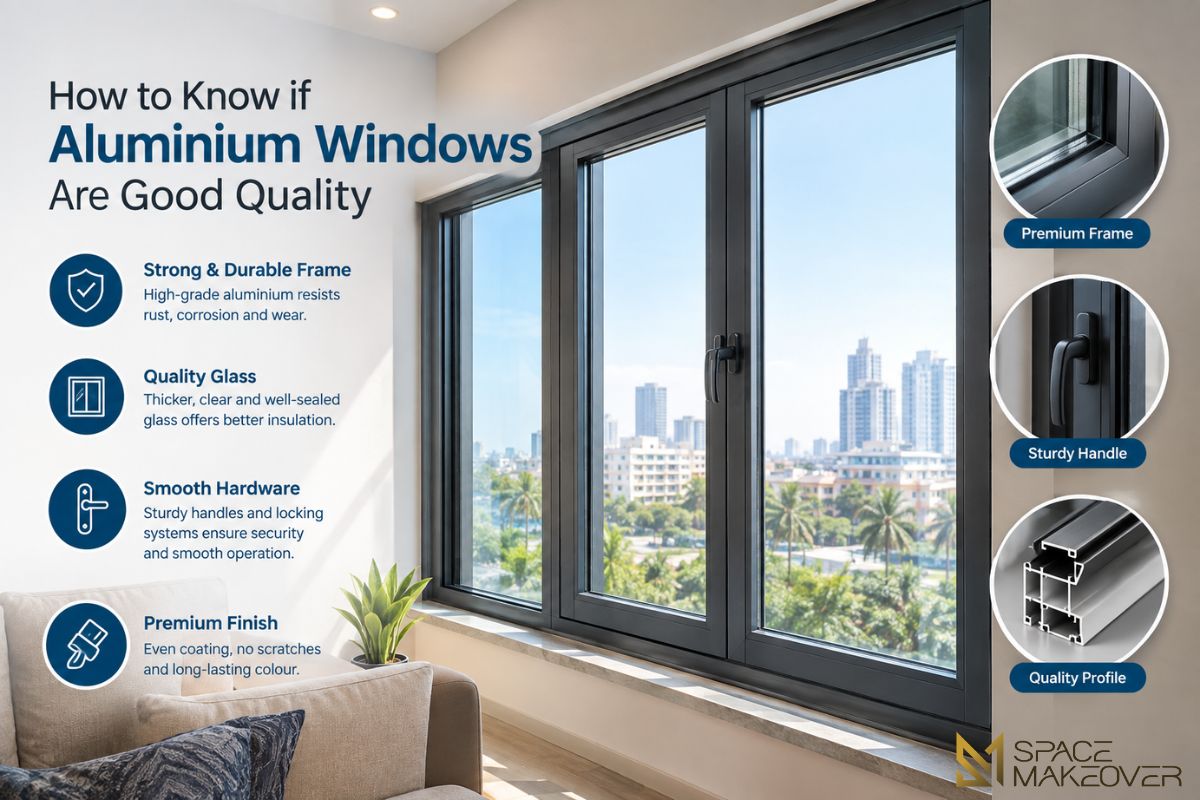
Four things determine the quality of the aluminium window: the aluminium profile, the glass, the hardware, and the careful installation. If the window has been created properly, it opens and locks smoothly, does not make any sounds while in use, and prevents dust and heat from entering inside. If any of these factors are not checked, even a top-end window may start behaving badly within a year.
Key takeaways
- The durability and functionality of a window are determined by its profile thickness, coating, and thermal breaks.
- Double glazing and laminated glass increase comfort in hot summer conditions in Dubai.
- High-quality hardware and seals do not require expertise to assess.
- The quality of aluminum fabrication is of the utmost importance, as bad working practices can affect high-quality materials.
Why does window quality actually matter in Dubai’s climate?
Windows in this location are challenged by conditions that most manufacturers do not even design for. The surface temperature of both glass and metal frames can be high at times, even exceeding 60°C, and summers can be accompanied by dust storms that bring with them fine dust particles that can reach windows. Meanwhile, in coastal areas, humidity may accelerate the corrosion of any item made of aluminum that has not been treated properly. A window that looks fine in a showroom may not be effective in practice, and may even break down within a year.
This shows the true price of skipping a quality check. A poorly sealed window not only lets the noise in. Heat is let in as well, and so is reflected in utility bills.
What makes aluminium a smart choice for windows?
Aluminum is now a common material across the UAE, and it makes sense:
- It doesn’t warp, rot, or swell like wood in the humid climate.
- It is resistant to rust and corrosion when properly coated, which is very important when constructing buildings near the coast.
- It allows the creation of elegant narrow constructions, which means we can use large windows and get more light.
- It can be recycled and usually has less negative impact on the environment compared to uPVC.
However, this doesn’t matter much, as poor production or installation of windows can result in two windows made of the same metal behaving completely differently in a year.
How to check the aluminium profile quality?
This is the area that most purchasers do not consider. However, it is the most critical area to consider.
- Thickness of the wall- You need to ask for the thickness in millimeters of the wall that you are considering. If the thickness is below 1.2mm, then aluminium is going to bend and become deformed much faster. A good manufacturer will always utilize 1.4mm to 1.6mm thickness for windows.
- Powder coating- A good powder coat is going to have a uniform surface with no brush strokes, uneven spots, or bubbles. You need to find out if the aluminium complies with AAMA 2603 or 2604.
- Thermal break- Good quality windows will always have thermal breaks, which are pieces of insulating material specially engineered in the area between the inner and outer aluminium layers.
- Points of welding and junctions- You need to feel the corners by running your hand along the entire edge. In the case of a bad manufacturing process, one can see if the welds are uneven or the corners are not square.
What to look for in the glass?
Glass choice is more important than most people think, especially in the summer.
- Single-glazed glass is inexpensive and does not do much blocking of heat and sound.
- Double-glazed units contain either air or gas, which gives them insulation properties and stops heat from travelling through them.
- Laminated glass adds an extra layer of safety, suitable for ground floors and where the wind could be problematic.
- Low E coating reduces infrared radiation while still allowing all visible light to go through.
If your supplier is unable to provide you with the thickness of the glass and the type of glass in millimeters, such as 6mm + 12mm air gap + 6mm in a standard DGU, it indicates a lack of transparency on their part and is worth noting.
Why do hardware and locking systems matter?
Windows fails first at hardware. Rollers, hinges, and locks are the most strained parts of the window throughout its lifespan, which is why the weaknesses occur in those places much earlier.
Here are some tips to remember:
- Rollers made of nylon or stainless steel are durable. Plastic rollers may crack in about a year.
- Locks should engage properly and shouldn’t require slamming the frame.
- Handles should not be loose or wobbly when the window is bought.
- Multi-point locks are better than single-latch locks in ensuring security, especially in the first-floor windows.
Moreover, if a window sticks, rattles, or has to be lifted to work properly, it is practically always due to damaged or undersized hardware, not only because of the window’s age.
Signs of poor craftsmanship to avoid
Some red flags don’t require any technical background to spot:
- Visible gaps between the frame and the wall after installation.
- Condensation forming between glass panes, a sure sign the seal has failed.
- Whistling on windy days, which means air is finding its way through gaps.
- Frames that feel warm on the interior side during peak heat, pointing to poor thermal insulation.
- Paint or coating that chips within months.
Any single item on that list could be minor. Several of them together usually mean the window was cheaply made, poorly fitted, or both.
Aluminium sliding windows: what sets good ones apart
Sliding windows are the go-to style across Dubai homes and offices, mostly because they don’t need extra clearance to open. But quality swings wildly between suppliers offering aluminium sliding windows in Dubai, and the differences aren’t always obvious at first glance.
A well-made sliding window moves with almost no resistance; two fingers should be enough. The track stays free of dust traps and sharp edges, and the panels sit flush where they interlock, with no light slipping through when closed.
Cheaper aluminium sliding windows often cut corners on track gauge and roller weight, and that shows up as sagging within a year or two, especially on the larger panels. If you’re comparing quotes, ask directly about track gauge and roller material rather than assuming every sliding system is built the same way underneath. At Space Makeover, this is one of the first things we go through with clients before recommending a system. Track and roller quality holds up longer than the finish does, even though the finish is what people notice first.
Slim sliding windows: A growing trend
Slim sliding windows Dubai homeowners are asking to more often trade visible frame width for uninterrupted glass. Part of it is looks. Part of it is practical: more glass area means more daylight without adding extra windows.
The catch is that slim profiles need careful engineering to hold their structural strength. A slim frame with a weak internal structure can flex under wind pressure, and that’s a real concern on higher floors, not just a theoretical one. Good manufacturers reinforce slim sliding windows buyers request with internal steel or aluminium bracing, rather than simply shaving down the visible frame.
If a slim design comes in noticeably cheaper than standard profiles, ask what reinforcement, if any, was used.
Aluminum works: choosing the right team
Even the best aluminium and glass combination falls apart with a rushed installation. The contractor matters just as much as the spec sheet.
Look for aluminum works in Dubai providers who:
- Put profile thickness, glass type, and hardware brand in writing before starting.
- Take actual on-site measurements instead of defaulting to standard sizes.
- Offer separate warranty coverage for material defects and installation workmanship.
- Have a portfolio of finished projects you can verify, not just renders.
If a supplier can’t answer basic technical questions about their own past aluminum works in Dubai, that’s not someone to trust with a large window order.
Certifications and standards worth asking about
The UAE doesn’t mandate one universal window certification, but a few reference points signal that a supplier takes quality seriously:
- QCC (Quality Conformity Certificate) from Dubai Municipality, for building materials.
- AAMA standards, for coatings and profile performance, referenced widely even outside the US.
- BS EN 12208 for watertightness and BS EN 12207 for air permeability, both used as benchmarks across Gulf construction.
Additionally, asking whether a product’s been tested against any of these is a reasonable question. A credible supplier will have paperwork ready, not just reassurance.
Maintenance signs that reveal true quality
Quality tends to show up months or years in, not on day one. Keep an eye on:
- How much dust tracks collect, and whether they’re still easy to clean after a year.
- Whether the powder coating fades or chalks under direct sun.
- Whether seals stay flexible or start cracking and going stiff.
- Whether locks still engage smoothly without needing lubrication every few weeks.
A window built from good materials should need occasional cleaning. Not repeated hardware fixes.
Cost vs quality: finding the right balance
It’s tempting to assume the priciest option is automatically the best one. That’s not really true either. Comparing specifications side by side gets you further than comparing price tags alone.
| Feature | Budget Aluminium Window | Quality Aluminium Window |
| Profile thickness | Under 1.2mm | 1.4mm–1.6mm |
| Glass | Single glazed | Double glazed / Low-E |
| Rollers | Plastic | Nylon or stainless steel |
| Thermal break | Absent | Present |
| Warranty | Limited or none | 5+ years typical |
Furthermore, paying a bit more upfront for a thermal break and double glazing tends to pay for itself through lower cooling bills within a few years. In Dubai’s heat, that math works out faster than people expect.
Conclusion
You can easily evaluate aluminium window quality once you learn what aspects to focus on: the profile thickness, the type of glass and hardware, and how well everything is assembled. If any of these components are not correct, you may need to replace the windows after just a couple of years, instead of two decades like it would be if you chose the proper materials for a climate like Dubai. It does not matter whether you are comparing aluminium sliding windows in Dubai for a new construction or for replacing old ones; as long as you ask the proper questions before making a decision, you will save yourself a lot of money and stress.
If you would like to hear a second opinion on your quote or would like to have someone to walk through the site with you before signing anything, feel free to contact the Space Makeover team.
Frequently asked questions
Look at the glass edge. Double-glazed units show a thin spacer bar between two panes. Single pane glass has no separation.
Aim for 1.4mm to 1.6mm wall thickness, especially on larger sliding panels facing direct sun. Anything thinner tends to flex over time.
Not the way steel does, but weak coatings can still corrode near the coast. Powder-coated aluminium tested to AAMA standards holds up well.
Typically 20 to 25 years with proper installation and glass, before hardware or seals need replacing. Cheaper builds fall well short of that.
Only if they’re not reinforced properly. A good slim sliding windows Dubai supplier builds in internal bracing to match standard-frame strength.
Powder coating gives more color options and a thicker protective layer. Anodizing produces a harder, more scratch-resistant surface, often used on commercial frames.
Yes. Ask for written profile thickness specs and glass type, and request hardware samples for rollers and locks before finalizing the order.
Usually a seal or gasket issue, or a gap between frame and glass from imprecise installation. Rarely a fault of the aluminium itself.
Generally, yes, especially on west- or south-facing units getting direct sun most of the day. It cuts both heat gain and outside noise.
Look for written specs, verifiable past projects, and warranties that separate materials from workmanship, rather than one vague blanket guarantee.