Waterproofing vs Damp Proofing: Key Differences Explained
Key Takeaways
- Waterproofing blocks water completely.
- Damp-proofing prevents light moisture.
- Roofs and terraces usually need waterproofing.
- Wrong treatment selection increases repair costs.
- When applied professionally, it is more durable.
- Signs of major structural damage are avoided by early inspection.
Waterproofing and damp-proofing are commonly confused and used for different purposes. Waterproofing blocks water completely, while damp-proofing only controls moisture. Therefore, choosing the right method depends on the level of water exposure, building condition, and long-term protection needs. The right expert, such as Space Makeover, can help the property owner choose the right solution before damages start to cost them a lot.
What is the main difference?
Many people are aware of peeling paint or wet walls and think that all wetness problems require waterproofing. That doesn’t always hold true, however. The functions of damp-proofing and waterproofing are different.
Here is the easiest way to understand it:
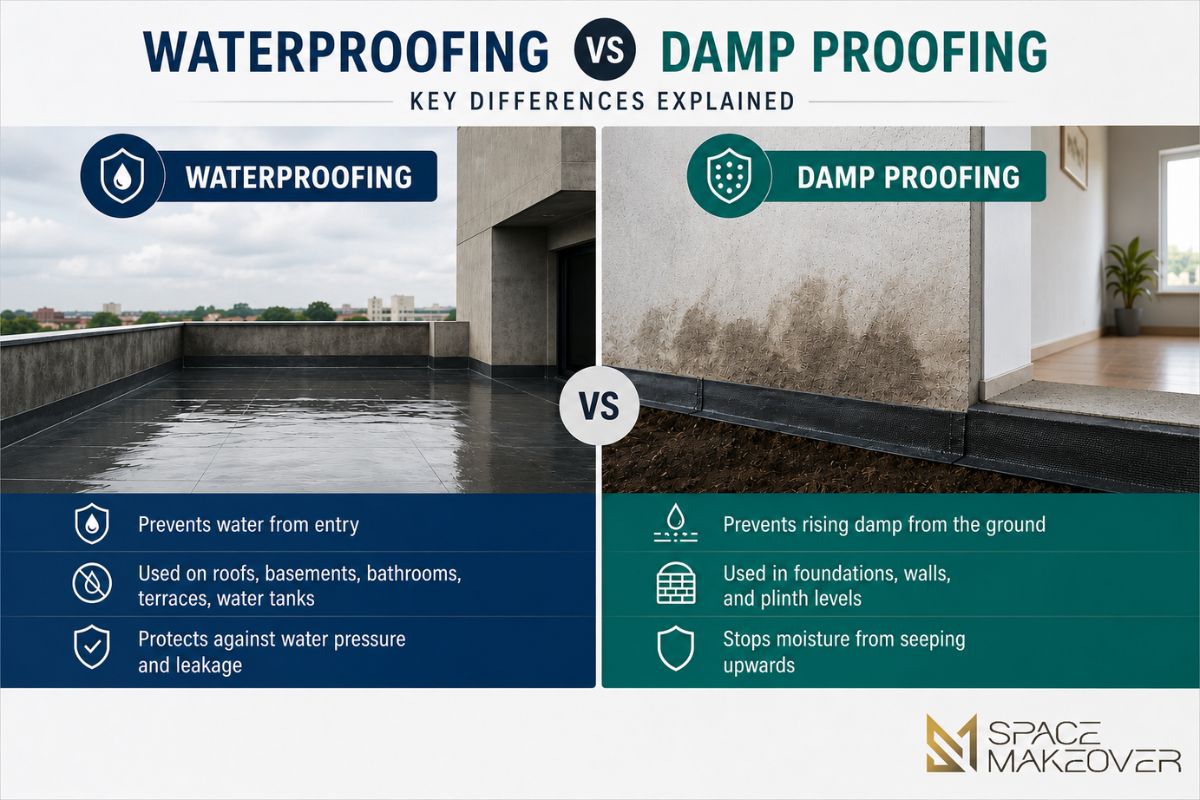
| Feature | Damp Proofing | Waterproofing |
| Purpose | Controls moisture | Stops water entry completely |
| Best for | Mild dampness | Heavy water exposure |
| Common Areas | Internal walls | Roofs, basements, terraces |
| Protection Level | Basic | Advanced |
| Lifespan | Moderate | Long-term |
Damp-proofing is effective when the moisture movement in the wall is slow. Waterproofing is more durable and offers protection to surfaces that are prone to rain, leaks, and standing water.
This difference can be explained during inspection when space makeover is the reason for the difference and using the wrong method can increase repair costs later.
When is waterproofing needed?
Waterproofing becomes significant in a structure when there is excessive water leakage or pressure. Under such conditions, the damp-proofing cannot prevent damage.
Common signs include:
- Water dripped from the ceiling.
- Leakage on terraces during the rainy season.
- Basement seepage
- Mold growth around roofs.
- The cracks will allow water to seep in.
Strong protection is needed on buildings in humid climates in particular. That is why many homeowners look for trustworthy roof waterproofing services in Dubai to avoid future structural problems.
The proper waterproofing system usually consists of
- Surface preparation
- Crack filling
- Waterproof membrane coating
- Protective sealing layer
Additionally, professional use extends the durability and long-term savings in maintenance costs.
Where does damp proofing work best?
The use of damp-proofing is primarily in areas of limited moisture exposure. It helps to stop moisture from seeping into walls and floors over time.
This method is commonly used in:
- Ground-floor walls
- Internal partitions
- Low-moisture storage spaces
- Newly constructed walls
While it is more affordable than damp proofing, it is not advisable to employ damp proofing in places where the rainwater is flowing directly or there is significant leakage. Many people travel there.
For example, if a terrace is leaking, it is possible to mask the problem with damp-proofing materials; however, the water can get through at a later time. This means that repair costs are higher.
Damp-proofing is recommended by Space Makeover primarily to prevent moisture issues, rather than to address major leakage issues.
How do both methods differ?
It’s not just the material difference. The application process, strength, and performance also vary.
The damp proofing usually encompasses the following:
- Bitumen coating
- Cement-based coating
- Moisture-resistant chemicals
Waterproofing Usually Includes:
- Polyurethane membranes
- Liquid waterproof coatings
- Cementitious waterproof systems
- Protective drainage layers
Furthermore, waterproofing produces more strong protection against continuous contact with water.
The majority of the waterproofing companies in Dubai are currently using high-level waterproofing coatings that handle heat, rain, and humidity. This helps roofs and outdoor walls to have a better life.
Another important point is maintenance. The need for damp-proofing repair may come before the need for waterproofing repair, and a good waterproofing system may have a longer life if it is installed correctly.
Which option lasts longer?
Waterproofing will last longer in general because it was created for tough conditions. But durability is also affected by:
- Surface quality
- Weather exposure
- Material type
- Application method
- Maintenance
A well-waterproofed terrace should last for many years with few problems. Conversely, even with high-dollar materials, they can go bad in no time with poor installation.
So, its experience is more important than choosing a product. One important aspect of space makeovers is the correct surface examination prior to any treatment, which is important as any hidden cracks or moisture may weaken the results later on.
Common mistakes property owners make
The problems with moisture tend to be increased because people put it off or pick the wrong treatment.
Here are some of the most frequent errors:
- Ignoring small wall patches
- Using paint instead of repair solutions
- Choosing coatings that are not inspected and are cheap.
- Using damp proofing when it is required.
- Failing to conduct regular roof maintenance
Moreover, a few leakages begin from minuscule cracks on the terrace that go unobserved in the summer months. Damage is quick to occur once it rains.
A quick look done at the appropriate time can save for future big structural repairs.
Why does expert application matter?
It’s not just about chemicals to protect moisture. Surface preparation, crack treatment, and drainage planning are also critical.
Usually, professional teams go through a full cycle:
- Moisture inspection
- Damage analysis
- Surface cleaning
- Crack sealing
- Product application
- Final testing
This is a systematic method that is more effective and long-lasting.
At Space makeover, they also suggest maintenance checks every so often since early detection equals lower repair costs and interior protection against mold and dampness.
Bottom line
It is important for property owners to know the difference between damp-proofing and waterproofing to prevent costly repairs and structural damage down the road. Damp proofing can be used for light damp conditions, and waterproofing can provide more protection against heavy water situations.
Hence, the selection of the appropriate solution is very critical for roofs, terraces, and external walls. With the help of space makeovers and expert roof waterproofing services in Dubai, the buildings can be safer, stronger, and longer-lasting.
Frequently asked questions
No, it is generally necessary to treat terrace leakage appropriately.
Yes, when done correctly using high-quality materials and preparation.
The more protection you need, the higher the cost of waterproofing.
A professional check-up occasionally helps ensure performance.