How to Choose the Best Glass for Slim Sliding Doors
Both laminated and toughened glass are good choices for slim sliding doors, typically 8 mm to 12 mm thick, with a Low-E coating to handle Dubai’s heat. The best choice depends on the door’s dimensions, how much sunlight and privacy you need, how much noise and heat you want, and your budget.
If you need to find a slim sliding glass door in Ajman or any other Emirates, this article lists the factors to keep in mind. You will learn about suitable glass types for slim doors, whether glass thickness is important in terms of safety, as well as all the cost-related aspects regarding a slim sliding door in Dubai.
Key takeaways
- Most slim sliding doors start with the core of tempered or laminated safety glass, approximately 8 mm to 12 mm thick.
- Low-E double-glazed glass is the most suitable option for the Dubai climate conditions as it provides a perfect combination of heat control, insulation and clarity.
- The final thickness should be based on panel size, wind exposure and hardware rating, and not a guess.
- The best way to compare real value is to do so by itemising quotes with the same specifications.
Why does glass choice matter for slim sliding doors?
A narrow sliding door is mostly glass, regulating safety, temperature, privacy, and appearance. If the choice is not good, it will have the possibility of heat gain, glare, noise, and breakage under wind pressure. Choosing the right glass ensures that the investment is protected and maintains room comfort year-round.
Slim sliding doors are a type of door that uses very thin frames to ensure the maximum view. The purpose of that design is for the glass to take on more of the visual and functional burden than in a traditional door. Each panel must be able to withstand impacts, as well as withstand the thermal stresses caused by hot and cold cycles, and move easily on its track for many years.
When looking for a slim sliding door in Dubai, homeowners tend to pay attention to the colour or the finish of the frames. The glass is just as important, as it will impact comfort on a daily basis. An appropriate pane will help maintain a cooler living room during July, help to diminish the need for blinds, and help to block the noise of a busy road. To visualize how our thin sliding doors will appear in finished rooms, you can view our options.
Moreover, the demand comes at an extra cost in Dubai. The temperature can easily reach 40°C or higher in the summer, and a single pane can become hot in a matter of moments when the sun shines directly on it. Glass that is effective in a temperate climate can not be effective in the UAE without the proper coating or thickness.
What types of glass are best for slim sliding doors?
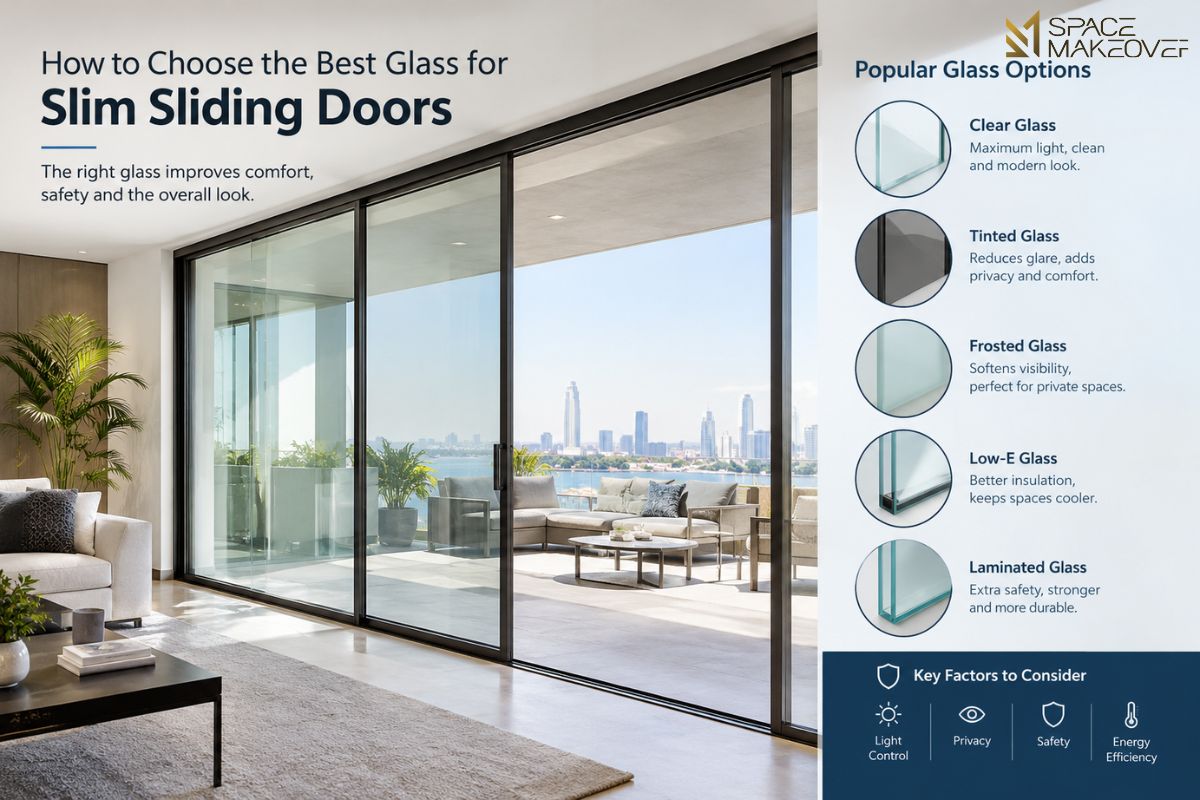
Tempered glass, laminated glass, double-glazed panels, and Low-E panels are the most popular choices. Tempered glass is strong and safe to break, laminated glass is secure and sound-reducing, double glazing is insulating, and Low-E coatings will reflect heat. There are many high-quality doors that incorporate two or more of these features.
- Tempered Glass for Strength and Safety
Tempered (also known as toughened) glass is heat-treated to make it several times as strong as standard annealed glass for the same thickness. If it does crack, it will result in small and fairly non-sharp pieces in comparison to the sharp fragments found in other kinds of glass. Hence, it is considered the standard for installing sliding glass doors.
All sizing, holes, etc. must be finalised before the tempered glass is cut or drilled. Request and get your supplier to confirm the actual size in writing prior to production.
- Laminated Glass for Security and Sound
Laminated glass consists of two or more layers of glass with a plastic interlayer between them. If the pane cracks, the interlayer will keep the pieces together, making forced entry more difficult. It also provides greater noise reduction over single glass in more apartment-like settings, in ground-floor apartments, and in buildings located near highways.
- Double-Glazed Units for Insulation
A double-glazed unit is a glass unit containing two panes separated by an air- or argon-gas-filled space. That gap will reduce heat transfer in either direction. It can help lower the cooling load and maintain more stable indoor temperatures in Dubai, where air-conditioning is used for a significant portion of the year.
- Low-E Coated Glass for Heat Control
Low-E, or low emissivity, coating is a thin film that prevents infrared heat from passing through the glass, but allows visible light to pass through. It improves the reduction of solar heat gain and prevents furniture and flooring from fading in the sun. Consider a coating that is both reflective and transparent, as overly reflective options can appear to reflect light from the exterior.
See our full range of aluminium and glass frames and windows. The main features are summarized below, and the table below provides a side-by-side comparison of them.
| Glass Type | Main Benefit | Best For |
| Tempered | Strength and safe breakage | Most standard sliding doors |
| Laminated | Security and noise reduction | Ground floors, apartments, busy roads |
| Double-glazed | Better insulation | Air-conditioned villas and offices |
| Low-E coated | Reduced solar heat gain | South and west facing openings |
How thick should glass be for a slim sliding door?
The thickness of most slim sliding doors is 8mm to 10mm of tempered glass, but larger or taller panels may require 10mm to 12mm. The thickness of the glass determines the strength, noise resistance, and weight of the sliding door. The exact amount will depend on the measurements taken by your installer and should be determined based on wind exposure.
The thicker the glass, the better it will block sound and the more weight it will have, but the more resistant it will be to flexing. The weight goes through the rollers and track, and the hardware needs to be rated for the end panel. If the glass is too large for the hardware, it will sag, the glass will slide unevenly, and it will wear out prematurely.
Several factors guide the right thickness:
- Panel width and height, as larger panels will require more strength,
- The height of the building and the wind exposure, as the wind pressure increases on higher floors.
- Glass thickness, because laminated glass is constructed from multiple layers which alter the overall thickness
- Roller and track size and the type of roller that is best for the final glass weight
The indicative guidance provided in the table below should be considered indicative only. Final Specifications will be determined through a site-specific engineering review.
| Panel Size (Approximate) | Typical Glass Choice | Notes |
| Up to about 1.2 m wide | 8 mm tempered | Suits smaller balcony or bathroom openings |
| About 1.2 m to 2 m wide | 10 mm tempered | Common for living room sliding doors |
| Over 2 m or tall panels | 10 mm to 12 mm tempered or laminated | Confirm with an engineer or installer |
Therefore, the same applies to other glass components such as glass balustrades and railings, meaning that glass thickness is important.
Which glass handles Dubai’s climate best?
Generally, double-glazed Low-E tempered glass is the best choice for Dubai’s climate. It reduces heat gain, reduces glare and UV exposure, and maintains cooler temperatures in the interior during the hot summer months. Tints and reflective films can provide additional control but will also limit natural light, so use them carefully.
Managing Heat and Solar Gain
Solar heat gain coefficient (SHGC) is a measure of the amount of solar heat that can penetrate a glass. The lower the number, the less heat will enter the room. When considering various types and styles of glass, inquire with your supplier about the SHGC rating of each option and compare them by that number, not just appearance.
Orientation matters too. The west- and south-facing doors receive the most heat during the afternoon hours, making them the most important doors to be Low-E and to have double glazing. Openings that don’t get as much direct sun may not require the same degree of treatment. Additionally, if you also want shade in front of the door, pergola and canopy options can provide shade to outdoor spaces.
Reducing Glare and UV Exposure
Bright living room lighting can be uncomfortable, particularly if there is any screen time. Tinted glass and coatings dim light, while UV filtering properties shield flooring, artwork, and upholstery from fading over time.
Handling Dust, Sand, and Humidity
Small particles of dust accumulate on tracks and may cause the glide to be delayed. Aluminium finishes and seals may be impacted by the humidity in the coastal environment over time. The glass will be fine in these situations, but the system around it should be selected to accommodate these conditions. Take these practical measures:
- Pick tracks with easy-to-clean surfaces or sealed channels
- Select rust-resistant finishes and hardware
- Arrange for regular cleanings of tracks and gaskets
- Make sure that the seals are rated for outdoor use
When moisture is a factor around openings, we can offer waterproofing services to protect adjacent walls and seams.
What drives the cost of these doors?
Slim sliding door price in Dubai largely hinges on the type of glass, its thickness, the size of the door, the design of the frame and door, the quality of the hardware, and the complexity of installation. The options available in two doors of the same size can make a huge difference in the cost. To ensure a fair comparison, ask for itemised quotes.
The cost of glass is a significant cost factor. The table below outlines the impact on the budget and what you get in return from each of the options. The prices mentioned are indicative and should be considered in relation to each other between projects and not as a fixed price.
| Glass Choice | Effect on Cost | Value Added |
| Tempered 8 to 10 mm | Moderate | Safety and everyday performance |
| Laminated | Higher | Security and sound reduction |
| Double-glazed Low-E | Higher | Insulation and heat control |
| Custom tint or coating | Varies | Privacy and style |
Other factors also shape the final figure:
- The dimensions and panels of the overall door.
- Frameless versus framed design
- The quality of the hardware and track.
- Access to site and installation complexity.
- Finish, colour, and customisation.
However, frameless designs generally require more glass and more accurate fittings than framed designs, which can make things more expensive. They are still popular for many buyers for the unobstructed view they offer.
How do you choose a reliable glass installer?
A good installer should check your opening, select the right glass for exposure and use, give you a copy of a glass specification, and warrant the workmanship. Before signing, request some examples of their work and post-sales assistance. The glass is only as good as the installation.
Clients looking for a slim glass door in Ajman can rely on a local team who are aware of the regional climate, conditions, and project timelines. Space Makeover is an Ajman-based company, offering aluminium and glass solutions for homes and businesses in the UAE. Information about Space Makeover can be found before requesting a site visit.
The team also specializes in Glass Works in Dubai for larger commercial projects, and office layouts can often be improved with the introduction of daylight through the use of office glass partitions. Use this checklist for every installer that you meet:
- Do they take measurements onsite before they quote?
- Do they give any recommendations for the size of the glass used?
- Do they have finished work that is similar to your projects?
- Have the scope of service, the type of glass, and the warranty been documented?
- What is their after-sales service and maintenance?
What mistakes should you avoid when buying glass?
Don’t select the lowest-priced glass without knowing its performance; overlook coatings for the sunny side, and overlook hardware ratings. Be aware that some quotes aren’t explicitly stating the thickness or type of glass. Small actions taken early can lead to big issues later.
The most common mistakes include:
- Using the thinnest glass for savings can cause flexing, noise, and lower safety margins.
- Ignoring solar orientation, so a west-facing door overheats the room every afternoon
- Using no Low-E or double glazing in an air-conditioned home increases cooling costs.
- Matching glass to the frame without checking the hardware’s weight rating
- Allowing general quotes without specifying the glass type.
- Failure to perform track cleaning leading to sticking and surface scratches.
Another way of doing bathrooms. Shower partitions may be constructed of tempered glass that is sealed for water resistance, but this is not the same as a living room sliding door. A specialist glassworks provider in Dubai can match the glass to each location, whether or not you require a bathroom enclosure or perhaps a complete set of doors.
How should you care for sliding door glass?
Use a soft cloth and mild, non-abrasive glass-cleaning product to clean glass. Low-E coatings can be scratched and lose effectiveness with abrasive pads. Remove debris from tracks every month during dusty periods of the year, check seals annually, and check for chips or cracks after impact. Simple practices help keep the glass and hardware usable for a longer time.
Wrapping up
When it comes to picking the right glass for a thin sliding door, safety, climate performance and value are all key considerations. Use tempered or laminated glass of the proper thickness and consider using Low-E double glazing if the opening is exposed to intense sunlight and obtain quotes on the same basis.
Furthermore, a slim sliding door in Dubai should make a strong statement and last for years, whether you are installing one in your villa or office. Contact Space Makeover today to get a site measurement and tailor recommendation.
Frequently asked questions
Tempered Low-E double-glazed glass is a combination that is typically best suited for the climate and conditions in Dubai.
The tempered glass thickness for most panels is 8mm to 10mm; however, for larger panels it could be 10mm to 12mm.
Yes. Low-E coatings reflect infrared heat and allow visible light to pass through, thus lowering the indoor temperature and reducing cooling demand.
Obtain quotes from each supplier and compare similar specifications, including the type of glass, thickness, and hardware and installation.