Do Glass Balustrades Increase Property Value?
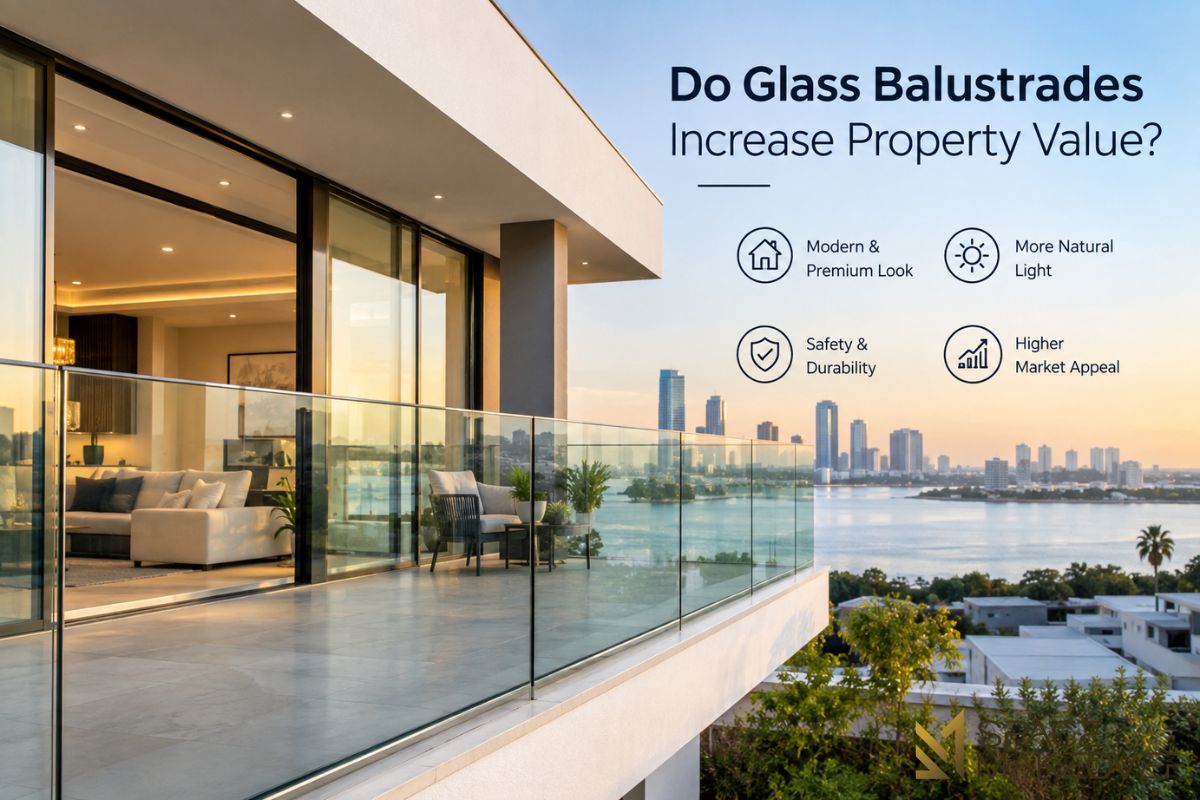
As per the topic, the answer is yes, glass balustrades do generally raise property values, although the extent of that depends on the location and quality of installation. For example, a frameless glass balcony or staircase railing normally has a greater visual impact on buyers compared to wrought iron or wood railings. However, the increased value is not guaranteed. A cheap glass panel can actually harm your listing if it appears poorly constructed or is not compliant with safety standards.
That’s short and simple. The rest is all about specific types of glass balustrades that help create value, the regulations regarding balustrades in Dubai, and the areas where funds should and shouldn’t be spent for glass balustrades in Dubai.
Key takeaways
- Glass balustrades improve the view and allow more light to enter the room, therefore raising the perceived value of the property.
- It is required that all balcony railings in Dubai comply with the strict regulations on guard height and gaps.
- Frameless glass is more expensive but looks more attractive.
- Improper installation or the wrong glass choice can lead to possible dangers of high-rise buildings collapsing.
Why do buyers respond to glass?
Walk into two identical apartments, one with a solid parapet wall on the balcony and one with a clear glass rail, and most people react differently to the second one before they can even say why. It’s the sightline. A solid wall chops the view and the light off at chest height. Glass doesn’t do that.
This aspect is more significant in Dubai than in several other places because a significant portion of the residential valuation is linked to the view: the water of the marina, the skyline of Downtown, the golf course in the backyard, etc. A balcony protected from the view by a solid stone or brick wall is an impediment to what the buyer intends to purchase. If there is glass instead of concrete, the living room, the balcony, and the view become joined as one continuous piece.
There is also a light argument. The properties with internal staircases (villas, duplexes, and some townhouses) tend to have staircases that do not get any direct sunlight. Utilizing glass balustrades instead of standard solid materials allows light to penetrate through the staircase from neighboring windows, ultimately providing a sense of spaciousness to the structure.
This shows buyers to express themselves in certain ways when choosing a property, which is why this material is often used by architects when designing high-end buildings.
Types of glass balustrades to choose from
Not all glass balustrades are the same product wearing different price tags. The structural approach behind each one changes what you’re actually paying for.
- Frameless glass balustrades– held by a base channel or spigots with no visible top or side rail. Cleanest look, highest cost, and needs thicker toughened or laminated glass to make up for the lack of a frame.
- Semi-frameless– a slim metal top rail or side posts with glass panels in between. Slightly cheaper and a bit more forgiving on installation tolerances.
- Framed glass balustrades– a full metal or aluminium frame around each panel. The least expensive option and the most common on budget and mid-range projects, though the frame does break up the view more than the other two.
- Structural glass fins– used less often, mostly on commercial or architectural feature staircases where the glass itself carries load.
Therefore, for balconies specifically, most Dubai residential projects use toughened glass, sometimes laminated toughened glass on higher floors, since laminated panels hold together even if the outer layer cracks. That’s not a good decision. It’s a safety one, and it’s usually specified by the consultant or contractor rather than left up to preference.
Where do they actually add value?
Location within the property changes what kind of return you get.
- Balconies and terraces do the most work here, particularly balcony enclosures in Dubai that pair a glass rail with a sliding or fixed enclosure system. Buyers almost always step onto the balcony when viewing an apartment, and an unobstructed, well-sealed enclosure reads as usable extra square footage instead of a token outdoor space.
- Internal staircases see a strong effect in villas and townhouses, weaker in apartments since most don’t have them at all. A glass stair rail against a feature wall, or next to a floating timber staircase, tends to be one of the more photographed spots in a listing.
- Pool decks and rooftop terraces also do well, since pool safety codes require a barrier anyway and glass satisfies that without boxing the area in.
- Ground-floor perimeter fencing is the weaker case. Glass competes with privacy needs at that level, and most buyers in villa communities actually want some opacity facing the street.
So the honest answer is that glass balustrades in Dubai add value where they open up a view or light source that was previously blocked, and less where privacy or budget makes a solid or semi-solid barrier the more practical option.
Safety rules you can’t skip in Dubai
This part isn’t optional, and skipping it is one of the fastest ways to turn a value-adding renovation into a compliance headache at resale.
Dubai’s building guidelines, aligned with the UAE Fire and Life Safety Code and enforced through Dubai Municipality and individual community management (Emaar, Nakheel, DAMAC, and others each have their own layer of oversight too), lay out fairly specific numbers:
- Any elevated space 760mm or more above the finished floor needs a guardrail.
- Balcony and terrace balustrade height must be at least 1,200mm, measured from the finished floor or the highest climbable point.
- Gaps between vertical balusters or posts can’t exceed 100mm. That’s the rule that stops a child from squeezing through.
- Horizontal elements below 760mm are generally avoided, since they turn the rail into something a kid can climb.
Moreover, if you’re doing balcony enclosures in Dubai as part of a renovation, get written confirmation from the installer that glass thickness and fixing method meet these numbers before signing off. A panel that looks fine but sits 100mm short of code height is exactly the kind of thing a building inspector, or a buyer’s surveyor down the line, will catch.
Cost factors and what drives the price
Glass balustrade pricing in Dubai varies a lot, and the headline “per metre” rate rarely tells the whole story. A few things move the number more than people expect:
- Glass thickness and type- 10mm toughened is common for lower balconies. Higher floors or longer unsupported spans often need 12mm to 19mm laminated toughened, which costs noticeably more.
- Fixing system- Spigot or clamp fixings for a frameless look cost more in labour than a channel-and-frame system.
- Height and span- Taller balustrades and longer continuous runs need thicker glass or extra support posts, and both add cost.
- Access and building type- High-rise jobs often need scaffolding or rope access, which adds real money compared with a ground-floor villa install.
- Finish on metal components- Powder-coated or stainless-steel fittings cost more than standard aluminium but hold up better against Dubai’s humidity and dust.
Furthermore, a rough way to think about it: framed systems sit at the lower end, semi-frameless in the middle, true frameless glass balustrades at the top, sometimes by a wide margin depending on glass thickness. Getting two or three quotes from contractors who specialise in glass works in Dubai is worth the time, since the same specification can come back priced quite differently between suppliers.
Maintenance: what it really takes
Glass has a reputation for being low-maintenance, and it mostly earns that, with a few caveats specific to this climate.
- Dubai’s dust and the occasional sandstorm mean glass panels need cleaning more often than the brochures suggest. Weekly or biweekly wiping keeps water spots and dust film from building up, especially on street-facing balconies.
- Salt air near the Marina or other coastal communities corrodes cheap metal fixings faster than it would inland. Stainless steel or properly coated aluminium fittings matter more here.
- Laminated glass resists scratching from sand-laden wind better than standard toughened glass, which is part of why it gets specified on higher, more exposed floors.
- Small chips near the edge should get checked by a professional rather than left alone. Edge damage on toughened glass can, rarely, lead to spontaneous breakage.
None of this is heavy upkeep compared with a timber balustrade that needs sanding and resealing every couple of years. It’s just not zero-maintenance either, whatever the sales copy says.
Common mistakes that waste the investment
A few things quietly erode the value glass balustrades are supposed to add:
- Using the wrong glass grade for the height- Cutting corners on thickness to save money on a high-floor balcony is a safety issue first and a resale red flag second.
- Skipping a structural sign-off- Some owners install balcony enclosures without checking whether the building’s facade or slab can even take the fixing loads, and that can trip up NOC approvals at resale.
- Ignoring community rules- Plenty of Dubai developments, Emaar communities among them, have their own guidelines on balcony alterations. Install without approval, and you risk a forced removal later, which wipes out whatever value you added.
- Poor sealing on enclosures- A glass enclosure that leaks in the rain or lets dust in defeats the point of enclosing the space at all.
- Mismatched hardware finishes- Chrome fittings against a matte black frame, or just the wrong bracket colour- is the kind of small thing buyers notice even when they can’t say what’s bothering them.
Glass balustrades vs other railing options
| Factor | Glass Balustrades | Wrought Iron | Timber/Wood | Stainless Steel Cable |
| Visual openness | High | Low | Low–Medium | Medium |
| Maintenance | Low–Medium | Medium (rust risk) | High (sealing/staining) | Low |
| Upfront cost | Medium–High | Medium | Low–Medium | Medium |
| Best suited for | Balconies, stairs, pool decks | Traditional/villa exteriors | Interior stairs, budget projects | Modern terraces, minimalist builds |
| Climate resistance (Dubai) | Good with laminated glass | Needs coating upkeep | Poor outdoors without heavy sealing | Good |
None of these wins across the board. Glass wins on light and view. Iron wins on a certain traditional look some villa owners specifically want. Cable rail sits somewhere in between on both cost and openness.
Wrapping up
Glass balustrades do tend to increase property value, with the honest caveat that the return depends on placement, glass quality, and whether the install actually meets Dubai’s safety requirements. A well-specified balcony rail or staircase balustrade, done to proper Glass Works in Dubai standards, can genuinely change how a space feels and how a buyer prices it in their head. A rushed or undersized one just turns into a maintenance headache with a paper trail of compliance issues attached. If you’re weighing this as a renovation decision rather than a new-build spec, walk the property first and figure out which spaces actually gain from the openness glass provides. That’s a better starting point than assuming every balcony or staircase benefits the same amount. Companies like Space Makeover, who work with Dubai’s aluminium, glass, and enclosure codes on a regular basis, can usually flag early on which parts of a property are worth the spend and which aren’t.
Frequently asked questions
According to Dubai Municipality guidelines, the requirement is for a minimum height of 1200mm above the finished floor level to the top of the rail or the highest plane to which it is possible to climb.
Not for load-bearing applications such as a balcony or a staircase. Correct fixing torque is required for structural glass work, as well as the correct glass specification, which has an impact on passing the glass safety approval.
As a general rule, yes, that’s the impression it creates, and that’s an unbroken view, but the price difference is significant and needs to be taken into consideration when comparing with your target audience.
A typical balcony run will take 1-3 days to complete, depending on length, access, and whether the old railing must be removed first.
Where floors are more than a certain height, laminated toughened glass is typically preferred as it will not shatter outwards, but will stay intact with a crack.
Usually yes, which is typically required before installation in developer-managed buildings, especially in the community/municipality.
Barely, indoors. If tint or shading is not used, an open balcony with glass will create a slight increase in heat gain, as it will retain more solar gain than an open balcony with a rail.
The safety rail is simply a balustrade. Typically, a balcony is enclosed with a combination of fixed glass and sliding glass doors that provide a more compelling enclosure and make the balcony feel more like a semi-enclosed room.