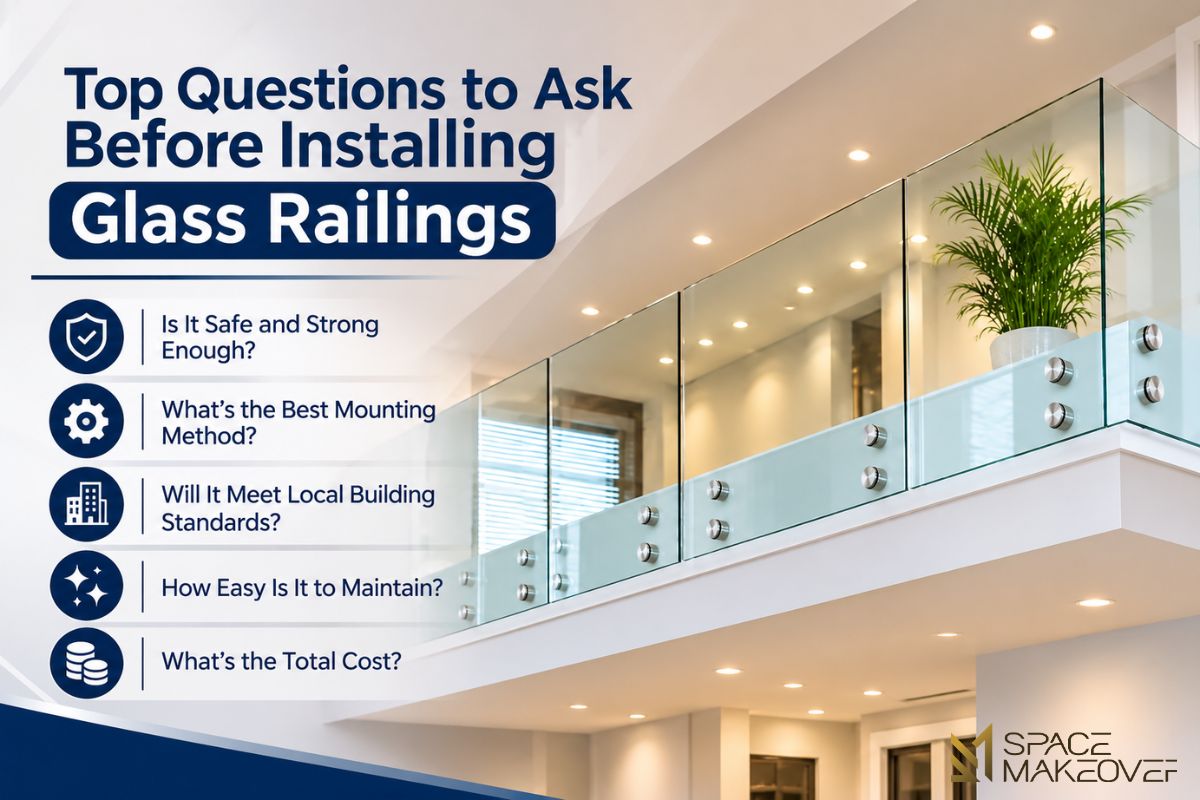
Top Questions to Ask Before Installing Glass Railings
Before installing glass railing systems, be sure to ask about the safety standards, thickness and type of the glass, the type of fixing system, price of the total product, time frames for installation, possible maintenance needs, and warranty. The answers to these questions will help you do a fair comparison of the offers and protect you from unpleasant surprises in future.
Glass railings may give a modern and clean look, but only if the glass, hardware, and installing technician are all up to standard. Most of these questions can be easily answered; however, many people still forget to ask them.
Key takeaways
- Write down confirmation of glass thickness, type, and safety requirements for approval purposes.
- Select laminated or tempered laminate window panes to use on balustrades of stairways and other hazardous locations.
- Compare quotes for the same specifications, such as hardware grade and repair methods.
- Inquire regarding maintenance and warranty terms to safeguard against future costs of repairs or replacements on this product.
What makes glass railings safe?
With any balcony, stair, or terrace railing, safety is first. Glass is strong, but only is safe if it is the correct thickness, tempered or laminated, and properly attached to the building structure. A nice-looking railing made of thin or untreated glass can break when stressed.
Inquire about the standards that the installer uses. In the UAE, railings need to withstand loads determined by local building codes- request the calculations or test data for the system you are interested in. An installer who is reputable will explain this information readily.
- Which glass thickness is right?
Glass thickness is determined by the height of the railing, the distance between supports, and whether or not the glass is used as a standalone panel or a framed system. The standard sizes of railing panels are between 12 mm and 21 mm thick, but the proper size should be determined by an engineer or by the installer’s technical team. Have them demonstrate the calculation and not just the number.
- Is laminated glass required?
Laminated glass is a type of glass that is made by sandwiching a layer of plastic between two sheets of glass. In the event of a single sheet tearing, the interlayer secures the pieces of the sheet in place, significantly lowering the danger of injury. Where people lean and walk near the edge, laminated glass is the safer option, such as on balconies and stairs. When installing, check with the installer to see what kind of interlayer is being used, as well as if the glass is also tempered – many railing panels have both.
Which type of glass should you choose?
All glass is not created equal. The primary choices differ in the strength, look, and price, and it’s helpful to compare these options side by side before making your final choice.
| Glass Type | Main Strength | Safety Feature | Best Use | Relative Cost |
| Tempered glass | Resists impact up to several times more than standard glass | Breaks into small blunt pieces | Balcony and terrace panels | Moderate |
| Laminated glass | Stays in place after breakage | Interlayer holds fragments together | Public areas, high floors, staircases | Higher |
| Tempered laminated glass | Combines strength and retention | Best of both features | Premium residential and commercial projects | Highest |
| Low-iron glass | Clearer, greener-looking edge | Same safety as the base type chosen | Projects where clarity matters most | Higher |
Moreover, inquire whether the quote is for tempered, laminated, or a combination of tempered and laminated. Some suppliers present the cheapest figure with the standard glass and only come out with the price difference once you sign a contract.
How should the railing be fixed?
The fixing system has an impact on the appearance of the railing and its durability. Typically, glass railings are connected to the floor, side wall, or edge of the slab and require different hardware for each installation type.
Frameless vs semi-frameless systems
With a frameless railing, the only parts that contain glass and metal are the patch fittings and the clamps, allowing for an almost seamless view. In some areas, the installation might be easier with the addition of a top handrail or base channel, creating a semi-frameless system for added support. Inquire about the system that the installer suggests for your location and why it is the installation’s best choice.
Questions to ask about hardware
- What is the type of stainless steel in the fittings? Grade 316 is saltwater corrosion-resistant, which is essential in coastal areas.
- Do the fixings have chemical or mechanical anchors, and what is the load rating of the anchors?
- Will the system expand thermally, as glass and metal expand at different rates when hot?
- Are the glass edges finished, and are they polished to prevent chipping?
Therefore, answers to these questions indicate that the installer not only has an understanding of the sale, but of the work as well.
What should you ask about cost and timeline?
Price is a consideration, but the cheapest isn’t necessarily the best. There are two railings that might appear exactly the same on paper, but they could have different grades of glass, hardware, and craftsmanship. Get a quote from all the installers with the same specification so that you can make an accurate comparison.
All of the above should be included in a complete quote:
- Type and thickness of glass
- Brand or grade of the hardware
- Fixing method
- Labour to install
- Site visits or measurements.
It should also indicate if the price encompasses the removal of old railings, clean-up, and delivery.
Additionally, timeline matters as well. Glass is typically made to order based on accurate measurements taken on site and, in the case of custom designs, may take weeks. Request a written plan that specifies the milestones, such as when the last measurement is to be taken and when installation begins.
Last but not least, inquire about the payment details. One of the usual methods is for a deposit to be paid in advance to begin production, and then the remainder when the new system is installed and inspected. Avoid any supplier that will require paying in full before completion of measurements.
How do you choose a reliable installer?
The most important part of the installation is as important as the glass. First of all, you must see how they have done with the type of railing you wish to have. Request pictures of previous projects, particularly those that are comparable to your balcony, staircase, or terrace.
However, if you are searching for glass works in Dubai, you should go for companies that come to your site before giving a quote; make sure that they provide their specifications in writing and don’t push any particular product but explain the options. Another good sign of a trustworthy company is if they can provide references from customers and insurance documentation.
Likely read reviews, but search for trends instead of individual comments. There’s more value in hearing about on-time work, clean finishing, and responsive aftercare than there is in the dramatic review either way.
Railings or balustrades: what is the difference?
The terms railing and balustrade are often confused, but they’re not the same. The highest handrail or guard that you grasp or stand on is called a railing. The entire system is a balustrade, which consists of the railing, posts or panels underneath the railing, and the base that supports them.
When you ask for quotes, this difference will be of significance. Some vendors may offer only the panels and not the base channel or handrail if you only request a glass railing. When you’re comparing glass balustrades in Dubai, ensure that both quotes include the entire system, so you’re comparing the same product.
Questions to ask are whether the balustrade has a handrail, how the panels are supported, and if the base is surface-mounted or recessed into the floor. These details have an impact on the overall appearance and expense.
How much maintenance does glass need?
One of the most important benefits of using glass railings is their low maintenance requirement. However, they still need regular care to keep them looking clear and to protect the fixings.
Use warm water and a soft microfiber cloth to clean the glass, or use a very mild glass cleaner, but do not use any cleaning pad that may cause scratching of the glass or damage the coating. In coastal areas, the salt deposits can accumulate quickly, so rinse the glass more frequently.
Therefore, check the fittings every six months or so, looking for loose screws, rust on the stainless steel, or sealing that has cracked or become unattached. Catching the problems early is much better than paying for the repair of a failed fitting.
Ask your contractor what type of maintenance they would recommend and whether you need to follow the instructions to be eligible for a warranty on your product. Some warranties may require regular inspections, so make sure you read the small print before signing anything.
Bottom line
Glass railing installation is one smart decision that will introduce light, view, and a contemporary feel to any living space or office. Wise decisions are always a result of asking appropriate questions at the beginning. Focus on safety, specifications of the glass, installation methods, price transparency, and professional level of the installer, and you will increase the probability of getting an effective railing for years to come.
Take your time, get detailed quotes in writing, and do not hesitate to ask for clarifications. The installer will be glad to answer your questions, and this will help you make the right choice.
Frequently asked questions
Residential installation usually takes between 2-5 days for completion. The timing is dependent upon project size, lead times for glass delivery, and any required pre-construction activities at a location.
While tempered glass is sturdy and secure for most balcony applications, laminated or tempered laminate provides superior safety, particularly on tall buildings or places where people might lean down.
Often, yes. Firstly, an installer should verify whether a slab or wall is suitable for bearing the load of the repair work. Reinforcement or another type of fix might be suggested by them for weak structures.
The price varies depending upon types of glass used for installation; hardware required to install it as well as its dimensions. Get an accurate quotation from me about my particular project because standard prices don’t always represent actual costs.