Wooden vs. Aluminium Pergolas: Which One Should You Choose?
Table of Contents
- Key Takeaways
- Why does pergola material choice matter?
- What makes wooden pergolas a popular choice?
- Why are aluminium pergolas gaining more demand?
- Wooden vs. aluminium pergolas: A practical comparison
- Which pergola is better for Dubai’s climate?
- Cost, maintenance, and long-term value explained
- How to choose the right pergola for your space?
- Conclusion
- Frequently asked questions
Key Takeaways
- Wooden pergolas offer natural beauty but need regular care and maintenance.
- Aluminium Pergolas are robust and stylish and perform well under harsh weather conditions.
- Climate and maintenance effort should guide your pergola material choice.
- Long term value makes aluminium pergolas a better value for money.
A wooden pergola or an aluminum pergola will be based on the space, weather, and maintenance requirements. Wooden pergolas are natural and warm in appearance, whereas aluminum pergolas are durable and require little care over a long period. At space makeover, they guide both alternatives, and hence you can make a decision with confidence.
Why does pergola material choice matter?
A pergola is not a shade structure. It is a part of your outdoor lifestyle. Hence, the selection of the appropriate material influences comfort, durability, and value.
Furthermore, most house owners are concerned with design. But climate, maintenance effort, and long-term performance are also significant. According to the experts, most pergola issues arise because the material was not suited to the environment.
Then, it is necessary to know how wood and aluminum will act in the real world before choosing a pergola.
What makes wooden pergolas a popular choice?
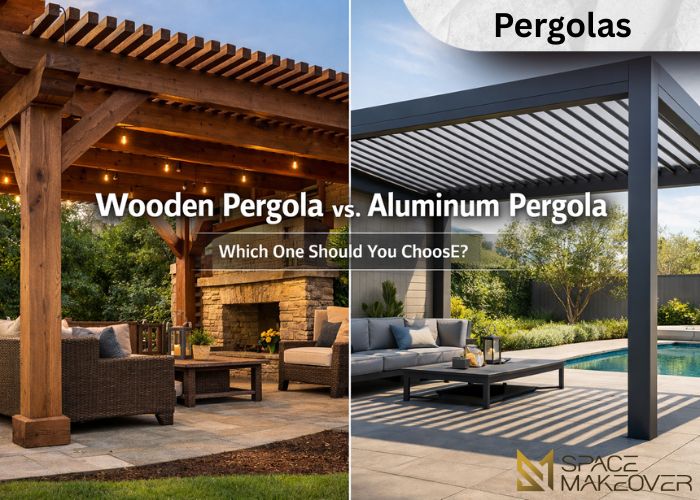
Wooden pergolas are characterized by the traditional and beautiful look. They are natural blends with gardens, patios, and villas.
The major advantages of wooden pergolas
- Natural and warm look
- Custom shapes and traditional designs
- Plants and creepers get along with him.
- Adds a cozy outdoor feel
However, wooden pergolas are often preferred for residential gardens. Many wooden pergola suppliers in Dubai offer treated wood to improve resistance against moisture and insects.
Limitations to Consider
Wooden pergolas are beautiful, but they need frequent maintenance:
- Occasional polishing or painting.
- Protection from termites
- Risk of fading due to sunlight
Therefore, wooden pergolas are the best to be used by people who appreciate maintenance and the natural finish.
Why are aluminium pergolas gaining more demand?
Aluminum pergolas are a new way of shading outdoors. They are appropriate in modern houses, hotels, and business premises.

The most important benefits of aluminum pergolas
- Weatherproof and rust-free.
- Less maintenance is needed.
- Long lifespan
- Clean and modern appearance
Additionally, the major aluminum pergola manufacturers in Dubai make pergolas that are effective in dealing with heat, humidity, and dust.
Practical Drawbacks
Nevertheless, not all people will be attracted to aluminum pergolas:
- Less natural than wood.
- Minor increase in start-up price.
Nevertheless, aluminum pergolas can be more economical to use in the long run.
Wooden vs. aluminium pergolas: A practical comparison
| Feature | Wooden Pergola | Aluminium Pergola |
| Appearance | Natural and warm | Modern and sleek |
| Maintenance | High | Very low |
| Weather Resistance | Moderate | Excellent |
| Lifespan | Medium | Long |
| Customization | High | Medium |
| Cost Over Time | Higher | Lower |
Through this comparison, it is evident that aluminum pergolas are durable, whereas wooden pergolas are charming.
Which pergola is better for Dubai’s climate?
The climate of Dubai consists of extreme heat, dust storms, and humidity. However, material performance is critical.
- The pergolas made of wood can swell or crack.
- Aluminum pergolas are heat resistant.
- Aluminum surfaces are easier to dust clean.
The majority of pergola suppliers in Dubai suggest using aluminum pergolas in the outdoor areas that are in direct sunlight.
Nevertheless, even shaded gardens with proper treatment are able to support wooden pergolas.
Cost, maintenance, and long-term value explained
First, cost is a factor that can be used. Pergolas made of wood can seem cheap. Maintenance expenses are, however, cumulative.
Cost Breakdown Insight
- Wooden pergolas require repainting and pest treatment.
- Aluminum pergolas require minimum cleaning.
- Aluminum structures are hardly repaired.
Moreover, aluminium pergola suppliers in Dubai are concerned with long-term performance, which will lower the cost of ownership by a great margin.
Therefore, pergolas made of aluminum are usually more cost-effective in the long term.
How to choose the right pergola for your space?
The following are some of the simple questions that you should ask yourself before making a final decision:
- Do I prefer natural beauty or modern design?
- What is the amount of time I can spare for maintenance?
- Does the pergola face inclement weather?
- Is this for home or commercial use?
At Space makeover, there are experts who recommend that pergola material should be matched to the lifestyle requirements and not to trends.
Additionally, the use of professionals who have experience will make the pergola fit perfectly in terms of design and functionality.
Conclusion
The decision of whether to use wooden or aluminum pergolas depends on the design, weather, and maintenance expectations. Wooden pergolas are warmer and more traditional, whereas aluminum pergolas are stronger and more convenient. Furthermore, under the professional advice of Space Makeover, you will be able to choose a pergola that will improve your outdoor area and provide long-term value.
A wise choice now will guarantee comfort, beauty, and longevity in the future.
Frequently asked questions
Pergolas made of aluminum are durable because of good weather resistance.
Yes, but under good treatment and frequent care.
Yes, the aluminum pergolas are compatible with the modern architectural designs.
Aluminium pergolas need very little maintenance compared to wood.